Заголовок категории
Winter fairy tale
Зимняя сказка
Day 1: Arrival to Bishkek
Meeting with your local guide and transfer to Bishkek city. Hotel accommodation and rest.
City tour: Main Victory Square, Central Store, Opera and Ballet Theater, oak park, gallery of fine arts, Kurmanjan monument and Panfilov park. Lunch at the cafe. After lunch, we visit the famous Osh market, which is the place where various ethnic groups of Kyrgyzstan are present. Evening briefing during the dinner. Overnight at the hotel.
Day 2: Bishkek – Issyk-Kul
Morning departure to Issyk-Kul Lake through the historical complex of Burana, visiting the outdoor museum and tombstones (stone sculptures). The museum’s collection contains archaeological finds such as dishes, coins, sculptures, and other archaeological sites.
Upon arrival in Cholpon-Ata, visit the open-air Petroglyphs Museum (stone paintings) and the cultural complex Rukh-Ordo in the city of Cholpon-Ata. Overnight at the hotel.
Day 3: Issyk-Kul – Karakol
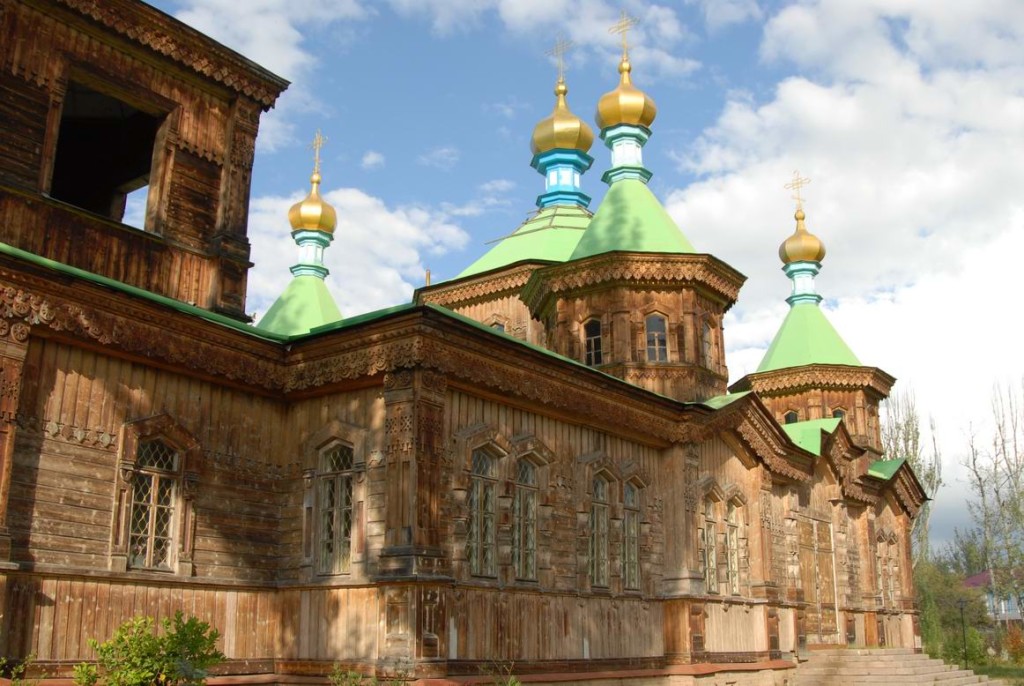
Departure to the city of Karakol, located in the east of the lake. Upon arrival in Karakol, accommodation in a guest house. Lunch at the cafe. In the afternoon, a sightseeing tour of the old wooden Russian church at the Holy Trinity, the Dungan Mosque and the local market. In addition, a visit to a local shop selling handmade souvenirs made by locals. Dinner and overnight at the guest house.
Day 4: Karakol
After breakfast, departure to the Karakol ski resort. Full day off, enjoy the fresh mountain air, scenery and skiing (optional). After lunch, return to Karakol. Overnight at the guest house.
Day 5: Karakol – Chon-Kemin
After breakfast, departure to the Chon-Kemin valley along the southern coast of Issyk-Kul. On the way, visit the famous rock formations of Jeti-Oguz (Seven Bulls). Lunch in the city of Balykchy. Arrival in the village of Kalmak-Ashuu, accommodation at Kemin Guesthouse.
Day 6: Chon-Kemin – Bishkek
Morning walk to the Kalmak-Ashuu gorge. Walk around the village and get to know the countryside and the life of the locals. Lunch and departure back to Bishkek.
Arrival and accommodation at the hotel. After lunch, an excursion to Osh Bazar for souvenirs and to the Central Store. Farewell dinner at a local restaurant. Overnight at the hotel.
Day 7: Bishkek – Manas Airport
Airport transfer . Early check out
Tajikistan
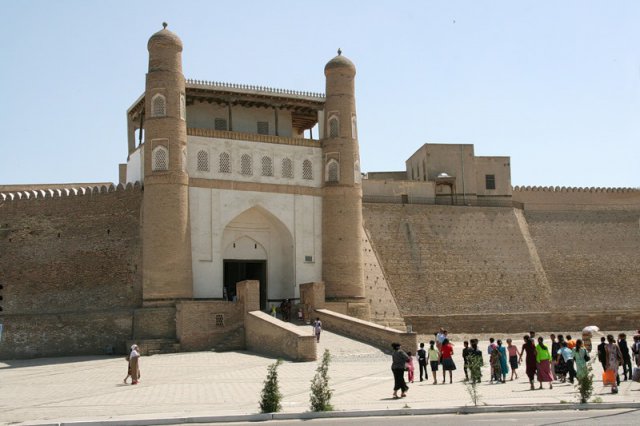
Tajikistan (Listeni/tɑːˈdʒiːkᵻstɑːn/, /təˈdʒiːkᵻstæn/, or /tæˈdʒiːkiːstæn/; Persian: تاجيكستان Тоҷикистон [tɔd͡ʒikɪsˈtɔn]), officially the Republic of Tajikistan (Persian: جمهورى تاجيكستان Tajik: Ҷумҳурии Тоҷикистон, Çumhuriji Toçikiston/Jumhuriyi Tojikiston; Russian: Респу́блика Таджикистан, Respublika Tadzhikistan), is a mountainous, landlocked country in Central Asia with an estimated 8 million people in 2013, and an area of 143,100 km2 (55,300 sq mi). It is bordered by Afghanistan to the south, Uzbekistan to the west, Kyrgyzstan to the north, and China to the east. Pakistan lies to the south, separated by the narrow Wakhan Corridor. Traditional homelands of Tajik people included present-day Tajikistan, Afghanistan and Uzbekistan.
The territory that now constitutes Tajikistan was previously home to several ancient cultures, including the city of Sarazm[7] of the Neolithic and the Bronze Age, and was later home to kingdoms ruled by people of different faiths and cultures, including the Oxus civilization, Andronovo culture, Buddhism, Nestorian Christianity, Zoroastrianism, and Manichaeism. The area has been ruled by numerous empires and dynasties, including the Achaemenid Empire, Sassanian Empire, Hephthalite Empire, Samanid Empire, Mongol Empire, Timurid dynasty, and the Russian Empire. As a result of the breakup of the Soviet Union, Tajikistan became an independent nation in 1991. A civil war was fought almost immediately after independence, lasting from 1992 to 1997. Since the end of the war, newly established political stability and foreign aid have allowed the country's economy to grow.
Tajikistan is a presidential republic consisting of four provinces. Most of Tajikistan's 8 million people belong to the Tajik ethnic group, who speak Persian Tajik, although many people also speak Russian. Mountains cover more than 90% of the country. It has a transition economy that is highly dependent on remittances, aluminium and cotton production.
Tajikistan means the "Land of the Tajiks". The suffix "-stan" (Persian: ـستان -stān) is Persian for "place of"[8] or "country"[9] and Tajik is, most likely, the name of a pre-Islamic (before the seventh century A.D.) tribe.[10] According to the Library of Congress's 1997 Country Study of Tajikistan, it is difficult to definitively state the origins of the word "Tajik" because the term is "embroiled in twentieth-century political disputes about whether Turkic or Iranian peoples were the original inhabitants of Central Asia."[10]
Samanid Empire
Cultures in the region have been dated back to at least the 4th millennium BCE, including the Bronze Age Bactria–Margiana Archaeological Complex, the Andronovo cultures and the pro-urban site of Sarazm, a UNESCO World Heritage site.[11]
The earliest recorded history of the region dates back to about 500 BCE when much, if not all, of modern Tajikistan was part of the Achaemenid Empire.[10] Some authors have also suggested that in the 7th and 6th century BCE parts of modern Tajikistan, including territories in the Zeravshan valley, formed part of Kambojas before it became part of the Achaemenid Empire.[12] After the region's conquest by Alexander the Great it became part of the Greco-Bactrian Kingdom, a successor state of Alexander's empire. Northern Tajikistan (the cities of Khujand and Panjakent) was part of Sogdia, a collection of city-states which was overrun by Scythians and Yuezhi nomadic tribes around 150 BCE. The Silk Road passed through the region and following the expedition of Chinese explorer Zhang Qian during the reign of Wudi (141–87 BCE) commercial relations between Han China and Sogdiana flourished.[13][14] Sogdians played a major role in facilitating trade and also worked in other capacities, as farmers, carpetweavers, glassmakers, and woodcarvers.[15]
The Kushan Empire, a collection of Yuezhi tribes, took control of the region in the first century CE and ruled until the 4th century CE during which time Buddhism, Nestorian Christianity, Zoroastrianism, and Manichaeism were all practiced in the region.[16] Later the Hephthalite Empire, a collection of nomadic tribes, moved into the region and Arabs brought Islam in the early eighth century.[16] Central Asia continued in its role as a commercial crossroads, linking China, the steppes to the north, and the Islamic heartland.
The Samanid ruler Mansur I (961–976).
19th-century painting of lake Zorkul and a local Tajik inhabitant.
It was temporarily under the control of the Tibetan empire and Chinese from 650–680 and then under the control of the Umayyads in 710. The Samanid Empire, 819 to 999, restored Persian control of the region and enlarged the cities of Samarkand and Bukhara (both cities are today part of Uzbekistan) which became the cultural centers of Iran and the region was known as Khorasan. The Kara-Khanid Khanate conquered Transoxania (which corresponds approximately with modern-day Uzbekistan, Tajikistan, southern Kyrgyzstan and southwest Kazakhstan) and ruled between 999–1211.[17][18] Their arrival in Transoxania signaled a definitive shift from Iranian to Turkic predominance in Central Asia,[19] but gradually the Kara-khanids became assimilated into the Perso-Arab Muslim culture of the region.[20]
During Genghis Khan's invasion of Khwarezmia in the early 13th century the Mongol Empire took control over nearly all of Central Asia. In less than a century the Mongol Empire broke up and modern Tajikistan came under the rule of the Chagatai Khanate. Tamerlane created the Timurid dynasty and took control of the region in the 14th century.
Modern Tajikistan fell under the rule of the Khanate of Bukhara during the 16th century and with the empire's collapse in the 18th century it came under the rule of both the Emirate of Bukhara and Khanate of Kokand. The Emirate of Bukhara remained intact until the 20th century but during the 19th century, for the second time in world history, a European power (the Russian Empire) began to conquer parts of the region.
Russian Tajikistan
See also: The Great Game and Russian Turkestan
Russian Imperialism led to the Russian Empire's conquest of Central Asia during the late 19th century's Imperial Era. Between 1864 and 1885 Russia gradually took control of the entire territory of Russian Turkestan, the Tajikistan portion of which had been controlled by the Emirate of Bukhara and Khanate of Kokand. Russia was interested in gaining access to a supply of cotton and in the 1870s attempted to switch cultivation in the region from grain to cotton (a strategy later copied and expanded by the Soviets).[citation needed] By 1885 Tajikistan's territory was either ruled by the Russian Empire or its vassal state, the Emirate of Bukhara, nevertheless Tajiks felt little Russian influence.
During the late 19th Century the Jadidists established themselves as an Islamic social movement throughout the region. Although the Jadidists were pro-modernization and not necessarily anti-Russian the Russians viewed the movement as a threat.[citation needed] Russian troops were required to restore order during uprisings against the Khanate of Kokand between 1910 and 1913. Further violence occurred in July 1916 when demonstrators attacked Russian soldiers in Khujand over the threat of forced conscription during World War I. Despite Russian troops quickly bringing Khujand back under control, clashes continued throughout the year in various locations in Tajikistan.[citation needed]
Soviet Tajikistan
Main articles: Basmachi movement and Tajik Soviet Socialist Republic
Soviet negotiations with basmachi, 1921
After the Russian Revolution of 1917 guerrillas throughout Central Asia, known as basmachi, waged a war against Bolshevik armies in a futile attempt to maintain independence. The Bolsheviks prevailed after a four-year war, in which mosques and villages were burned down and the population heavily suppressed. Soviet authorities started a campaign of secularization, practicing Islam, Judaism, and Christianity was discouraged and repressed, and many mosques, churches, and synagogues were closed.[21] As a consequence of the conflict and Soviet agriculture policies, Central Asia, Tajikistan included, suffered a famine that claimed many lives.[22]
In 1924, the Tajik Autonomous Soviet Socialist Republic was created as a part of Uzbekistan, but in 1929 the Tajik Soviet Socialist Republic (Tajik SSR) was made a separate constituent republic, however the predominantly ethnic Tajik cities of Samarkand and Bukhara remained in the Uzbek SSR. Between 1927 and 1934, collectivization of agriculture and a rapid expansion of cotton production took place, especially in the southern region.[23] Soviet collectivization policy brought violence against peasants and forced resettlement occurred throughout Tajikistan. Consequently, some peasants fought collectivization and revived the Basmachi movement. Some small scale industrial development also occurred during this time along with the expansion of irrigation infrastructure.[23]
Two rounds of Soviet purges directed by Moscow (1927–1934 and 1937–1938) resulted in the expulsion of nearly 10,000 people, from all levels of the Communist Party of Tajikistan.[24] Ethnic Russians were sent in to replace those expelled and subsequently Russians dominated party positions at all levels, including the top position of first secretary.[24] Between 1926 and 1959 the proportion of Russians among Tajikistan's population grew from less than 1% to 13%.[25] Bobojon Ghafurov, Tajikistan's First Secretary of the Communist Party of Tajikistan from 1946–1956 was the only Tajikistani politician of significance outside of the country during the Soviet Era.[26] He was followed in office by Tursun Uljabayev (1956–61), Jabbor Rasulov (1961–1982), and Rahmon Nabiyev (1982–1985, 1991–1992).
Tajiks began to be conscripted into the Soviet Army in 1939 and during World War II around 260,000 Tajik citizens fought against Germany, Finland and Japan. Between 60,000(4%)[27] and 120,000(8%)[28] of Tajikistan's 1,530,000 citizens were killed during World War II.[29] Following the war and Stalin's reign attempts were made to further expand the agriculture and industry of Tajikistan.[26] During 1957–58 Nikita Khrushchev's Virgin Lands Campaign focused attention on Tajikistan, where living conditions, education and industry lagged behind the other Soviet Republics.[26] In the 1980s, Tajikistan had the lowest household saving rate in the USSR,[30] the lowest percentage of households in the two top per capita income groups,[31] and the lowest rate of university graduates per 1000 people.[32] By the late 1980s Tajik nationalists were calling for increased rights. Real disturbances did not occur within the republic until 1990. The following year, the Soviet Union collapsed, and Tajikistan declared its independence.
Tajik men and women rally on Ozodi square in Dushanbe shortly after independence, 1992.
Independence
Tajikistani Civil War
Spetsnaz soldiers during the civil war, 1992.
The nation almost immediately fell into civil war that involved various factions fighting one another; these factions were often distinguished by clan loyalties.[33] More than 500,000 residents fled during this time because of persecution, increased poverty and better economic opportunities in the West or in other former Soviet republics.[34] Emomali Rahmon came to power in 1992, defeating former prime minister Abdumalik Abdullajanov in a November presidential election with 58% of the vote.[35] The elections took place shortly after the end of the war, and Tajikistan was in a state of complete devastation. The estimated dead numbered over 100,000. Around 1.2 million people were refugees inside and outside of the country.[33] In 1997, a ceasefire was reached between Rahmon and opposition parties under the guidance of Gerd D. Merrem, Special Representative to the Secretary General, a result widely praised as a successful United Nations peace keeping initiative. The ceasefire guaranteed 30% of ministerial positions would go to the opposition.[36] Elections were held in 1999, though they were criticized by opposition parties and foreign observers as unfair and Rahmon was re-elected with 98% of the vote. Elections in 2006 were again won by Rahmon (with 79% of the vote) and he began his third term in office. Several opposition parties boycotted the 2006 election and the Organization for Security and Cooperation in Europe (OSCE) criticized it, although observers from the Commonwealth of Independent States claimed the elections were legal and transparent.[37][38] Rahmon's administration came under further criticism from the OSCE in October 2010 for its censorship and repression of the media. The OSCE claimed that the Tajik Government censored Tajik and foreign websites and instituted tax inspections on independent printing houses that led to the cessation of printing activities for a number of independent newspapers.[39]
Russian border troops were stationed along the Tajik–Afghan border until summer 2005. Since the September 11, 2001 attacks, French troops have been stationed at the Dushanbe Airport in support of air operations of NATO's International Security Assistance Force in Afghanistan. United States Army and Marine Corps personnel periodically visit Tajikistan to conduct joint training missions of up to several weeks duration. The Government of India rebuilt the Ayni Air Base, a military airport located 15 km southwest of Dushanbe, at a cost of $70 million, completing the repairs in September 2010.[40] It is now the main base of the Tajikistan air force. There have been talks with Russia concerning use of the Ayni facility,[41] and Russia continues to maintain a large base on the outskirts of Dushanbe.[42]
In 2010, there were concerns among Tajik officials that Islamic militarism in the east of the country was on the rise following the escape of 25 militants from a Tajik prison in August, an ambush that killed 28 Tajik soldiers in the Rasht Valley in September,[43] and another ambush in the valley in October that killed 30 soldiers,[44] followed by fighting outside Gharm that left 3 militants dead. To date the country's Interior Ministry asserts that the central government maintains full control over the country's east, and the military operation in the Rasht Valley was concluded in November 2010.[45] However, fighting erupted again in July 2012.[46] In 2015 Russia will send more troops to Tajikistan, as confirmed by a report of STRATFOR (magazine online)[47]
In May 2015, Tajikistan's national security suffered a serious setback when Colonel Gulmurod Khalimov, commander of the special-purpose police unit (OMON) of the Interior Ministry, defected to the Islamic State.[48]
Politics
Presidential Palace
Almost immediately after independence, Tajikistan was plunged into a civil war that saw various factions, allegedly backed by Russia and Iran[citation needed], fighting one another. All but 25,000 of the more than 400,000 ethnic Russians, who were mostly employed in industry, fled to Russia. By 1997, the war had cooled down, and a central government began to take form, with peaceful elections in 1999.
President of Tajikistan, Emomali Rahmon, has ruled the country since 1994.
"Longtime observers of Tajikistan often characterize the country as profoundly averse to risk and skeptical of promises of reform, a political passivity they trace to the country’s ruinous civil war," Ilan Greenberg wrote in a news article in The New York Times just before the country's November 2006 presidential election.[49]
Tajikistan is officially a republic, and holds elections for the presidency and parliament, operating under a presidential system. It is, however, a dominant-party system, where the People's Democratic Party of Tajikistan routinely has a vast majority in Parliament. Emomalii Rahmon has held the office of President of Tajikistan continually since November 1994. The Prime Minister is Kokhir Rasulzoda, the First Deputy Prime Minister is Matlubkhon Davlatov and the two Deputy Prime Ministers are Murodali Alimardon and Ruqiya Qurbanova.
The parliamentary elections of 2005 aroused many accusations from opposition parties and international observers that President Emomalii Rahmon corruptly manipulates the election process and unemployment. The most recent elections, in February 2010, saw the ruling PDPT lose four seats in Parliament, yet still maintain a comfortable majority. The Organization for Security and Co-operation in Europe election observers said the 2010 polling "failed to meet many key OSCE commitments" and that "these elections failed on many basic democratic standards."[50][51] The government insisted that only minor violations had occurred, which would not affect the will of the Tajik people.[50][51]
The presidential election held on November 6, 2006 was boycotted by "mainline" opposition parties, including the 23,000-member Islamic Renaissance Party. Four remaining opponents "all but endorsed the incumbent", Rahmon.[49] Tajikistan gave Iran its support in Iran's membership bid to join the Shanghai Cooperation Organisation, after a meeting between the Tajik President and the Iranian foreign minister.[52]
Freedom of the press is ostensibly officially guaranteed by the government, but independent press outlets remain restricted, as does a substantial amount of web content. According to the Institute for War & Peace Reporting, access is blocked to local and foreign websites including avesta.tj, Tjknews.com, ferghana.ru, centrasia.ru and journalists are often obstructed from reporting on controversial events. In practice, no public criticism of the regime is tolerated and all direct protest is severely suppressed and does not receive coverage in the local media
Uzbekistan
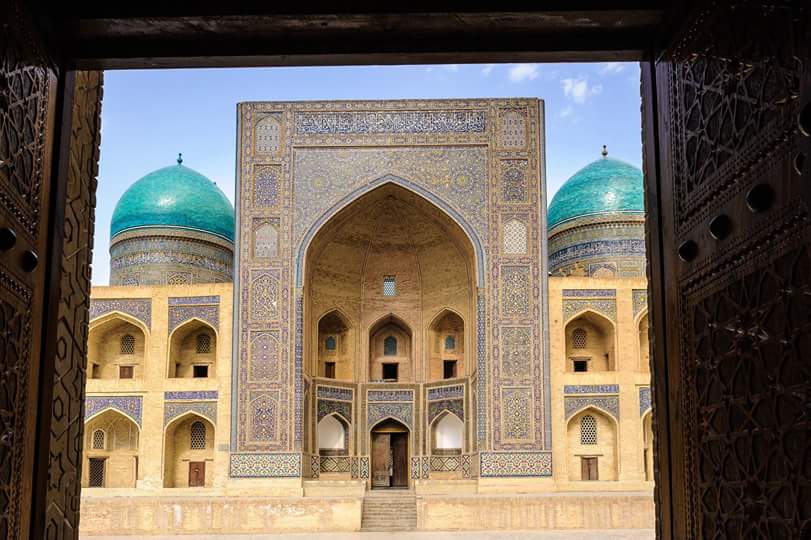
Uzbekistan (US Listeni/ʊz.ˈbɛk.ɪ.ˌstæn/, UK /ʊz.ˌbɛk.ɪ.ˈstɑːn/), officially the Republic of Uzbekistan (Uzbek: Oʻzbekiston Respublikasi/Ўзбекистон Республикаси), is a doubly landlocked country in Central Asia. It is a unitary, constitutional, presidential republic, comprising 12 provinces, 1 autonomous republic, and 1 capital city. Uzbekistan is bordered by five countries: Kazakhstan to the north; Tajikistan to the southeast; Kyrgyzstan to the northeast; Afghanistan to the south; and Turkmenistan to the southwest.
Once part of the Turkic Khaganate and later Timurid Empires, the region that today includes the Republic of Uzbekistan was conquered in the early 16th century by Eastern Turkic-speaking nomads. The area was gradually incorporated into the Russian Empire during the 19th century, and in 1924 what is now Uzbekistan became a bordered constituent republic of the Soviet Union, known as the Uzbek Soviet Socialist Republic (Uzbek SSR). Following the breakup of the Soviet Union, it declared independence as the Republic of Uzbekistan on 31 August 1991 (officially celebrated the following day).
Uzbekistan is officially a democratic,[11] secular, unitary, constitutional republic with a diverse cultural heritage. The country's official language is Uzbek, a Turkic language written in latin alphabet and spoken natively by approximately 85% of the population; however, Russian remains in widespread use. Uzbeks constitute 81% of the population, followed by Russians (5.4%), Tajiks (4.0%), Kazakhs (3.0%), and others (6.5%). A majority of Uzbeks are non-denominational Muslims.[12] Uzbekistan is a member of the CIS, OSCE, UN, and the SCO.
Uzbekistan's economy relies mainly on commodity production, including cotton, gold, uranium, and natural gas. Despite the declared objective of transition to a market economy, its government continues to maintain economic controls which imports in favour of domestic "import substitution".
Uzbekistan is the happiest country in the Commonwealth of Independent States, according to World Happiness Report.[13]
Uzbekistan has an area of 447,400 square kilometres (172,700 sq mi). It is the 56th largest country in the world by area and the 42nd by population.[14] Among the CIS countries, it is the 5th largest by area and the 3rd largest by population.[15]
Uzbekistan lies between latitudes 37° and 46° N, and longitudes 56° and 74° E. It stretches 1,425 kilometres (885 mi) from west to east and 930 kilometres (580 mi) from north to south. Bordering Kazakhstan and the Aral Sea to the north and northwest, Turkmenistan to the southwest, Tajikistan to the southeast, and Kyrgyzstan to the northeast, Uzbekistan is one of the largest Central Asian states and the only Central Asian state to border all the other four. Uzbekistan also shares a short border (less than 150 km or 93 mi) with Afghanistan to the south.
Uzbekistan is a dry, landlocked country. It is one of two doubly landlocked countries in the world (that is, a country completely surrounded by landlocked countries), the other being Liechtenstein. In addition, due to its location within a series of endorheic basins, none of its rivers lead to the sea. Less than 10% of its territory is intensively cultivated irrigated land in river valleys and oases. The rest is vast desert (Kyzyl Kum) and mountains.
The highest point in Uzbekistan is the Khazret Sultan, at 4,643 metres (15,233 ft) above sea level, in the southern part of the Gissar Range in Surkhandarya Province, on the border with Tajikistan, just northwest of Dushanbe (formerly called Peak of the 22nd Congress of the Communist Party).[15]
The climate in the Republic of Uzbekistan is continental, with little precipitation expected annually (100–200 millimetres, or 3.9–7.9 inches). The average summer high temperature tends to be 40 °C (104 °F), while the average winter low temperature is around −23 °C (−9 °F).[16]
History
Alexander the Great at the Battle of Issus.
The first people known to inhabit the Central Asian region of modern-day Uzbekistan were Iranian nomads who arrived from the northern grasslands of what is now Kazakhstan[citation needed] sometime in the 1st millennium BC. These nomads, who spoke Iranian dialects, settled in Central Asia and began to build an extensive irrigation system along the rivers of the region.[citation needed] At this time, cities such as Bukhoro (Bukhara), Samarqand (Samarkand) and Chash (Tashkent) began to appear as centres of emerging government and high culture. By the 5th century BC, the Bactrian, Soghdian, and Tokharian states dominated and ruled over the region.
As China began to develop its silk trade with the West, Iranian cities took advantage of this commerce by becoming centres of trade. Using an extensive network of cities and rural settlements in the province of Mouwaurannahr (a name given the region after the Arab conquest) in Uzbekistan, and further east in what is today China's Xinjiang Uygur Autonomous Region, the Soghdian intermediaries became the wealthiest of these Iranian merchants. As a result of this trade on what became known as the Silk Route, Bukhoro and Samarqand eventually became extremely wealthy cities, and at the time Transoxiana (Mawarannahr) was one of the largest, most influential and powerful Persian provinces of antiquity.[21][full citation needed]
Triumphant crowd at Registan, Sher-Dor Madrasah
Russian troops taking Samarkand in 1868.
Macedonian ruler Alexander the Great conquered in 327 BC the Persian Empire provinces Sogdiana and Bactria, which contained the territories of modern Uzbekistan. A conquest was supposedly of little help to Alexander as popular resistance was fierce, causing Alexander's army to be bogged down in the region that became the northern part of the Hellenistic Greco-Bactrian Kingdom. The kingdom was replaced with the Yuezhi dominated Kushan Empire in the 1st century BC. For many centuries the region of Uzbekistan was ruled by the Persian empires, including the Parthian and Sassanid Empires, as well as by other empires, for example those formed by the Iranian Hephthalite and Turkic Gokturk peoples.
In the 8th century, Transoxiana, the territory between the Amudarya and Syrdarya rivers, was conquered by the Arabs (Ali ibn Sattor) who enriched the region with the Early Renaissance. Many notable scientists lived there and contributed to its development during the Islamic Golden Age. Among the achievements of the scholars during this period were the development of trigonometry into its modern form (simplifying its practical application to calculate the phases of the moon), advances in optics, in astronomy, as well as in poetry, philosophy, art, calligraphy and many others, which set the foundation for the Muslim Renaissance.
In the 9th and 10th centuries, Transoxiana was included into the Samanid State. Later, Transoxiana saw the incursion of the Turkic-ruled Karakhanids, as well as the Seljuks (Sultan Sanjar) and Kara-Khitans.[22]
The Mongol conquest under Genghis Khan during the 13th century would bring about a change to the region. The Mongol invasion of Central Asia led to the displacement of some of the Iranian-speaking people of the region, their culture and heritage being superseded by that of the Mongolian-Turkic peoples who came thereafter. The invasions of Bukhara, Samarkand, Urgench and others resulted in mass murders and unprecedented destruction, such as portions of Khwarezmia being completely razed.[23]
Following the death of Genghis Khan in 1227, his empire was divided among his four sons and his family members. Despite the potential for serious fragmentation, the Mongol law of the Mongol Empire maintained orderly succession for several more generations, and control of most of Transoxiana stayed in the hands of the direct descendants of Chagatai Khan, the second son of Genghis Khan. Orderly succession, prosperity, and internal peace prevailed in the Chaghatai lands, and the Mongol Empire as a whole remained a strong and united kingdom (Ulus Batiy, Sattarkhan).
Two Sart men and two Sart boys in Samarkand, c. 1910
During this period, most of present Uzbekistan was part of Chagatai Khanate except Khwarezm was part of Golden Horde. After decline of Golden Horde, Khwarezm was briefly ruled by Sufi Dynasty till Timur's conquest of it in 1388.[25] Sufids rules Khwarezm as vassals of alternatively Timurids, Golden Horde and Uzbek Khanate till Persian occupation in 1510.
In the early 14th century, however, as the empire began to break up into its constituent parts. The Chaghatai territory was disrupted as the princes of various tribal groups competed for influence. One tribal chieftain, Timur (Tamerlane),[26] emerged from these struggles in the 1380s as the dominant force in Transoxiana. Although he was not a descendant of Genghis Khan, Timur became the de facto ruler of Transoxiana and proceeded to conquer all of western Central Asia, Iran, the Caucasus, Mesopotamia, Asia Minor, and the southern steppe region north of the Aral Sea. He also invaded Russia before dying during an invasion of China in 1405.[24]
Timur was known for his extreme brutality and his conquests were accompanied by genocidal massacres in the cities he occupied.[27]
Timur initiated the last flowering of Transoxiana by gathering together numerous artisans and scholars from the vast lands he had conquered into his capital, Samarqand. By supporting such people, he imbued his empire with a rich Perso-Islamic culture. During his reign and the reigns of his immediate descendants, a wide range of religious and palatial construction masterpieces were undertaken in Samarqand and other population centres.[28] Amir Timur initiated an exchange of medical discoveries and patronized physicians, scientists and artists from the neighbouring countries such as India;[29] His grandson Ulugh Beg was one of the world's first great astronomers. It was during the Timurid dynasty that Turkic, in the form of the Chaghatai dialect, became a literary language in its own right in Transoxiana, although the Timurids were Persianate in nature. The greatest Chaghataid writer, Ali-Shir Nava'i, was active in the city of Herat (now in northwestern Afghanistan) in the second half of the 15th century.[24]
The Timurid state quickly split in half after the death of Timur. The chronic internal fighting of the Timurids attracted the attention of the Uzbek nomadic tribes living to the north of the Aral Sea. In 1501 the Uzbek forces began a wholesale invasion of Transoxiana.[24] The slave trade in the Khanate of Bukhara became prominent and was firmly established.[30] There were between 25,000 and 60,000 Tajik slaves in Bukhara alone in 1821.[31] Before the arrival of the Russians, present Uzbekistan was divided between Emirate of Bukhara and khanates of Khiva and Kokand.
In the 19th century, the Russian Empire began to expand and spread into Central Asia. There were 210,306 Russians living in Uzbekistan in 1912.[32] The "Great Game" period is generally regarded as running from approximately 1813 to the Anglo-Russian Convention of 1907. A second, less intensive phase followed the Bolshevik Revolution of 1917. At the start of the 19th century, there were some 3,200 kilometres (2,000 mi) separating British India and the outlying regions of Tsarist Russia. Much of the land in-between was unmapped.
By the beginning of 1920, Central Asia was firmly in the hands of Russia and, despite some early resistance to the Bolsheviks, Uzbekistan and the rest of the Central Asia became a part of the Soviet Union. On 27 October 1924 the Uzbek Soviet Socialist Republic was created. From 1941 to 1945, during World War II, 1,433,230 people from Uzbekistan fought in the Red Army against Nazi Germany. A number also fought on the German side. As many as 263,005 Uzbek soldiers died in the battlefields of the Eastern Front, and 32,670 went missing in action.[33]
On 31 August 1991, with the dissolution of the Soviet Union, Uzbekistan declared independence. 1 September was proclaimed the National Independence Day.

Southern flavor and the heart of Tien Shan
"Mountrek Ecotours" team would like to introduce you to a fascinating region perched in the middle of Tien Shan. Kyrgyzstan, a country of nomads in the due heart of Central Asia, offers largely unexplored mountains with splendid playground for all nature- and virgin-land-lovers. The Kyrgyz people who have preserved its tradition of hospitality live peacefully in a surprising variety of landscapes and have made this country the pearl of Central Asia with steppes, prairies, deserts, and also canyons, high alpine valleys, and lakes with turquoise waters. In summer, as well as in winter times, NMountrek invites you to unpublished programs.
Program:
Day 1 Airport - Osh:
Meeting at Osh airport. Transfer and accommodation in a guest house. Rest & breakfast. Visit of southern Osh market. Lunch in the city, in one of the local cafes. After lunch, visit the holy mountain Suleiman, and museums. Walk in the park Alymbek Datka.Dinner in guest house.Night in the guest house.
Day 2 Osh - Arslanbob:
Drive towards Arslanbob walnut forest in the southern part of Kyrgyzstan. On the way visit the town of Uzgen, which was once an important city Karakhanid Kaganate (Turkic dynasty) and a major trading center on the Silk Road. The architectural complex of the 11th century minaret and three mausoleums dating from the 11th and 12th centuries. Uzgen is one of the unique architectural monuments of medieval Central Asia. Arrival in Arslanbob and dinner. The walk to the waterfall. Dinner and overnight in a guest house.
Day 3: Arslanbob - Kazarman:
Leaving the city of Osh. Return to the direction of the city of Jalal-Abad. Crossing the Fergana mountain range to get to the heart of the Central Tien Shan. Homestay.
Day 4 Kazarman - Son-Kul:
After lunch, we pass through two small pass to get to Tash-Rabat caravanserai in the late 15th century and a unique stone building in Central Asia at the time. He served as a refuge for travelers and traders. Overnight in the yurt.
Day 5 Son-Kul 3016 m.
Morning horseback riding on the shore of lake. We will ride from one yurt to another to experience the life of the nomads., Seeing their way of life on jailoo where locals graze cattle. Ability to try mare's milk (sour mare's milk), the Kyrgyz national drink. Overnight in the yurt.
Day 6 Son-Kul - Bokonbaevo:
Trip to Kalmak-Ashu (3440m) through the valley Tolok (4 hours). Transfer to Kochkor. Where can we get to know the national traditions and customs of Kyrgyz hunter with a golden eagle. Overnight with a local family.
Day 7 Bokonbaevo - Karakol:
We continue our trip to the east towards the lake Issyk-Kul, the second largest mountain lake in the world (1600m alt). Moving along the southern side of the village and the arrival Bokonbaevo village. Night in homestay.
Day 8 Karakol - Altyn Arashan - Karakol:
Morning hike on the top of the gorge. Picnic. Returning to the camp in the afternoon. Overnight in the yurt or refuge.
Day 9 Karakol - Bishkek:
In the morning free time. The ability to swim and sunbathe on the beach. Transfer to Bishkek. Overnight at hotel.
Day 10 Bishkek - Manas Airport
Transfer to the international airport Manas. Flight home.
Dates:
From mid-June to mid-September
Price includes:
- Meeting at the airport
- Transport
- Guide service
- Full board
- Housing
- Rental horses and instructors
- Admission to museums
Price does not include:
- Travel insurance
- Flights and taxes
- Visa support
- Alchogol and mineral water
- Last Supper in Bishkek
- Additional services in Jalal-Ab
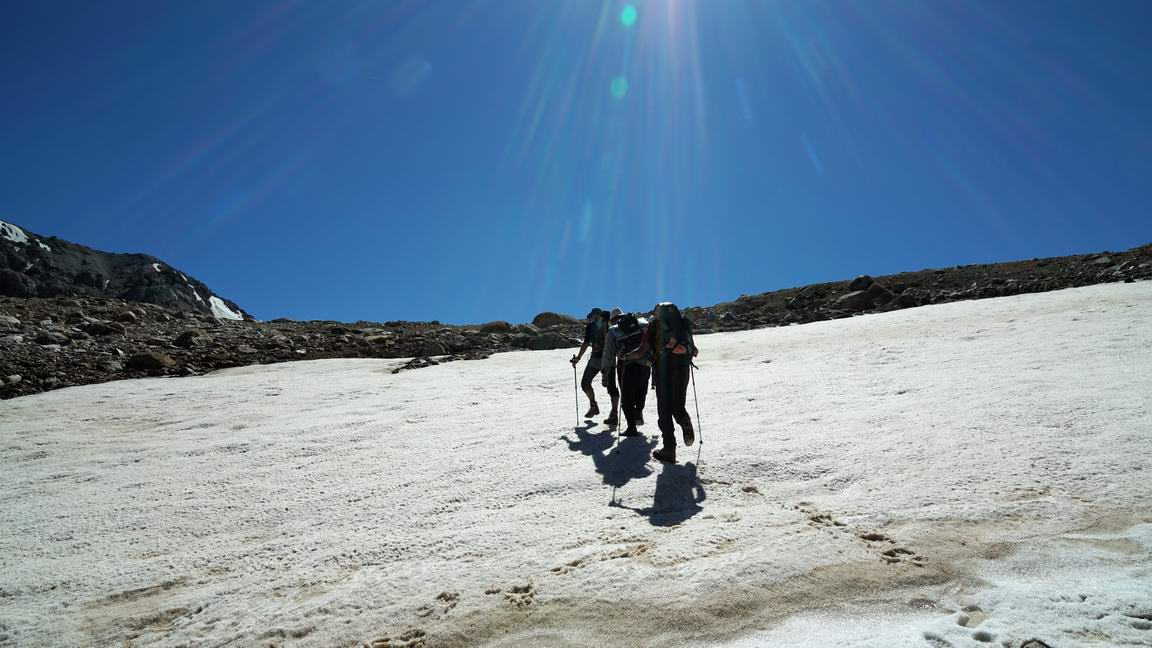
Blue lakes of Pamir-Alay
The Mountrek Ecotours team would like to introduce you to a fascinating country located in the center of the Tien Shan. Kyrgyzstan - a country of unprecedented beauty and nomadic culture, offers mostly unexplored mountains with a magnificent platform for all lovers of natural and virgin lands. The Kyrgyz, who have maintained their traditions of hospitality, live in harmony with nature in an amazing variety of landscapes that turn this country into a pearl of Central Asia (steppes, prairies, deserts, as well as canyons, high alpine valleys and lakes with turquoise water). As in summer and in winter, the Mountrek Ecotours invites you to unpublished programs.
Program:
Day 1: Flight Bishkek - Osh.
Meeting at the airport and transfer to a hotel. Accommodation at the hotel, rest and after breakfast journey to the heart of the Osh market, which is one of the largest and most colorful of Central Asia; all the locals pass by this place where craftsmen and suppliers of all types are grouped by sector. Late afternoon walking up to the Mount Suleiman, a place of pilgrimage of Islam religion. Dinner in town and overnight in a hotel.
Day 2: Osh - Sary Mogol pastures:
Transfer to the Sary Mogul valley. Morning transfer to Sary Mogol, we go up the Gulcho River, passing through Osh. We leave the plains and civilization and we pass the Taldyk pass. Picnic in the Alai Valley. In the afternoon we arrive at the stopping place, then a walk in the vicinity of the camp. Overnight in a yurt.
Day 3: Pasture Sarah Mogol- Lake Sary-Mogol:
Hike to the foot of the pass Sary Mogol (4150m). In the morning we head to the lakes at the foot of the Sary-Mogol pass, climbing a steep slope with a scree in the direction of the Alai Range. This is one of the difficult stages of this route. In the afternoon, we go up a large glacial circus with lakes. We go down to the lake, located on the shores of the lower lake. Overnight in tents.
Day 4: Lake Sary-Mogol - pasture Sary Mogol:
Trekking to Sary-Mogul valley (3350 m). Today, down the Sary-Mogul valley, the landscape is wild and imposing. We discover a nomadic lifestyle. Installation in tents. Overnight in a tents.
Day 5: jailoo Sary-Mogol-South - Kara-Kabak
Trekking through the high plateau of Korumdu. In the morning, we go up to the Korumdu plateau, then we pass through two passes in altitude around 4000 m to the Kara-Kabak valley. The panorama is very extensive and offers incredible views of Lenin Peak. Overnight in tents.
Day 6: Kara-Kabak - Damzhayloo: Hiking to the lakes Kosh Kel.
Trekking to the Kosh Kel lakes. In the morning we pass a steep pass of 4100 m to go down to the neighboring valley, follow a small path between bushes and small meadows, wade along the Kashka-Suu river. The valley goes west and the grazing site expands amid high peaks. The second pass is located on high. 4150 m hiding beautiful landscapes, a long climb, then we easily descend from the pass to Lake Kosh Kel and set up a camp. Overnight in tents.
Day 7: Damzhayloo - Day of hiking on glacial lakes of Damzhayloo
Day outings to the glacial lakes of Damzhayloo. Walking day to Damjayloo ridges, which hide several lakes above our camp, picnic near large lakes. Return to the same camp. Overnight in tents.
Day 8: Damzhayloo - Ming Jar:
A long descent through pastures, overlooking the Zaalai mountain range, which ends with a view of Lenin Peak and the village of Kashka-Suu. Then transfer to the foot of the base camp of Lenin and the installation of the camp of the upper part of the Achyk Tash river. Overnight in tents.
Day 9: Trekking to the Base Camp 1:
After breakfast, we cross the Travelers Pass to the heights. 4100m. Then we go through a steep path to the beginning of the Achyk Tash river. We are expected by local horse carriers who earn money by transporting across a large river ford. We continue for another hour to arrive at destination BC1. A little rest, and then one hour walk up to the Lenin Glacier. Dinner and night at BC 1.
Day 10 Base Camp 1.
Day of the transition to the western hill: Trekking up to the middle of the day +550 meters to the west hill; Beautiful panoramic view from the top to our camp, and the snow-capped peaks surrounding the valley. We descend to Base Camp 1, to say goodbye and go down to the lower base camp, where we were waiting for our driver. Then move on our truck in the village of Sary-Mogul. Overnight in guest house.
Day 11. The village of Sary Tash - Osh:
Transfer to Osh. Lunch in Osh. Accommodation in a hotel and rest. In the afternoon walk to Alymbek Datka's museum. Last dinner at a local restaurant. Overnight at the hotel.
Day 12. The city of Osh - Osh International Airport:
Transfer to Osh airport. Flight home.
Date:
From mid-July to mid-September
Price includes:
- Organization of stay
- All transfers incl. airport
- English speaking guide
- Full board incl. drinking water
- Accommodation described in the program
- Transportation of luggage during trekking and horse riding
- Rental camping equipment (tents, mats, kitchen utensils)
- All visits indicated in the program
- Entrance fees to national parks or nature reserves
- Entrance fees to museums mentioned in the program.
Price does not include:
- Insurance and repatriation insurance CR
- International airfare and taxes;
- Alcohol
- Additional services are not mentioned in the program;
- Personnel expenses and personal equipment rental (ATV, sleeping bag, water bottle, flashlight, etc.)
- Additional costs associated with personal problems (health, loss of luggage, etc.).
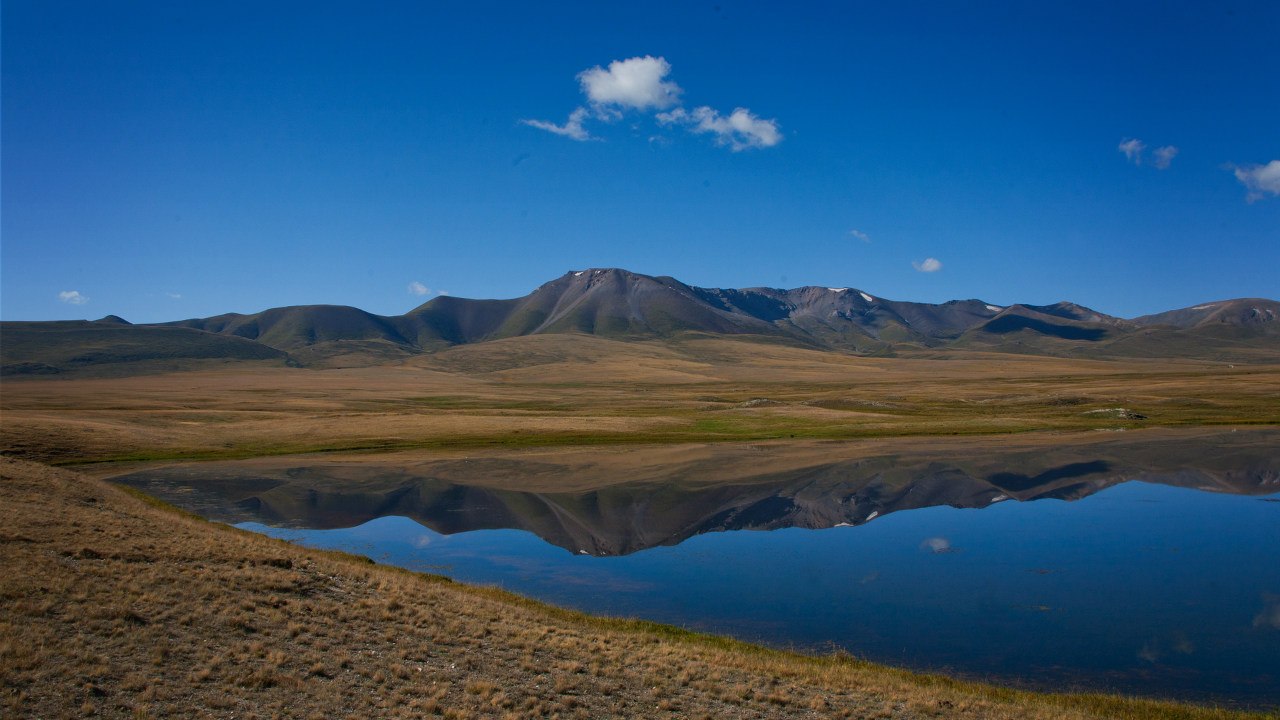
From the pearl to the heart of Kyrgyzstan
"Mountrek Ecotours" team would like to introduce you to a fascinating region perched in the middle of Tien Shan. Kyrgyzstan, a country of nomads in the due heart of Central Asia, offers largely unexplored mountains with splendid playground for all nature- and virgin-land-lovers. The Kyrgyz people who have preserved its tradition of hospitality live peacefully in a surprising variety of landscapes and have made this country the pearl of Central Asia with steppes, prairies, deserts, and also canyons, high alpine valleys, and lakes with turquoise waters. In summer, as well as in winter times, NMountrek invites you to unpublished programs.
Program
Day 1 Bishkek - Chon Kemin:
After breakfast, transfer to the Chong-Kemin, which is located in the national park of the same name. Along the way, visit of the tower Burana. Lunch in Tokmok, where you can try one of the national dishes of Kyrgyzstan - manty. Then drive to the National Park of Chong-Kemin. Arriving in the village Karool Dobo. Evening walk in the countryside on horseback. Overnight in a local guest house. 200 km., 3-4 hours
Day 2 Chon Kemin – Karakol.
Transfer to Karakol. Along the way, walk in the Red Canyon Konorchek. Lunch at the Boom gorge. Visit of petroglyphs in Ornok. After lunch, we will visit the ethno-center Ruh Ordo, or visit the hot springs in Chon Okuktuu. Arrival in Karakol, a city was founded in the 19th century as a Russian garrison, where lived the famous Russian explorer Przewalski. Later in the afternoon visit of the mosque Dungan Trinity Cathedral to understand the life of the Kyrgyz people of the 19th century. Accommodation in Karakol in the guest house. 310km. 5-6 hours.
Day 3 Karakol - Jeti-Oguz - Kochkor:
After breakfast, transfer to the Jety-Oguz through the wilderness. A short walk around the red rocky cathedral in the resort Jeti Oguz, Seven bulls. Transfer to Kochkor along the southern shore of the lake. On the way stop and lunch at home of Sagynbek, the famous hunter with a golden eagle in Kyrgyzstan. After lunch, walk to Kyzyl Tuu, and the way to Kochkor. Visiting the museum of national crafts. National show of felt. Overnight in the guest house.
Day 4 Kochkor - Son-Kul lake:
The way to Son-Kul Lake through Kalmak Ashu (3448m). Arrival to Son-Kul Lake. Then horseback riding from one tent to another by the shores of Lake Son-Kul ("Lake on the Edge"), located on the peak 3016 m. We can see the life of the nomadic people, traditions and customs of the ancestors of the Kyrgyz people. Meeting with a local family, we spend the night in yurt. (Depending on weather conditions, the night at Song Kul can be cancelled)
Day5 Son-Kul - Suusamyr - Bishkek:
In the morning, breakfast with local nomads, go through the Gulls to Kyzyl Oi, a typical Kyrgyz village. Lunch in Kyzyl Oi. Then, on the way visit of the museum and the village of famous Kyrgyz hero of the 19th century, Kojomkul. Crossing of of the huge pasture Suusamyr to get to Bishkek.
Date:
From end-May till mid-October
Price includes :
- Organization of the stay
- All transfers in vehicle
- English speaking tour guide
- Full board incl. drinking water
- Accommodation described in the program
- Carrying luggage during trekking and horse riding
- Rent camping equipment (tents, mats, kitchen utensils)
- All the visits indicated in the program
- Entry fees at national parks or nature reserves
- Entry fees at museums mentioned in the program.
- National or regional flights specified in the program.
Price does not include :
- From/to airport
- Insurance repatriation and CR insurance
- International airfare and taxes;
- Alcohol or sweetened mineral water;
- Additional services not mentioned in the program;
- Staff costs and rental of personal equipment (ATV, sleeping bag, water bottle, flashlight, etc.)
- Tips;
- Additional costs due to personal problems (health, loss of luggage, etc.).
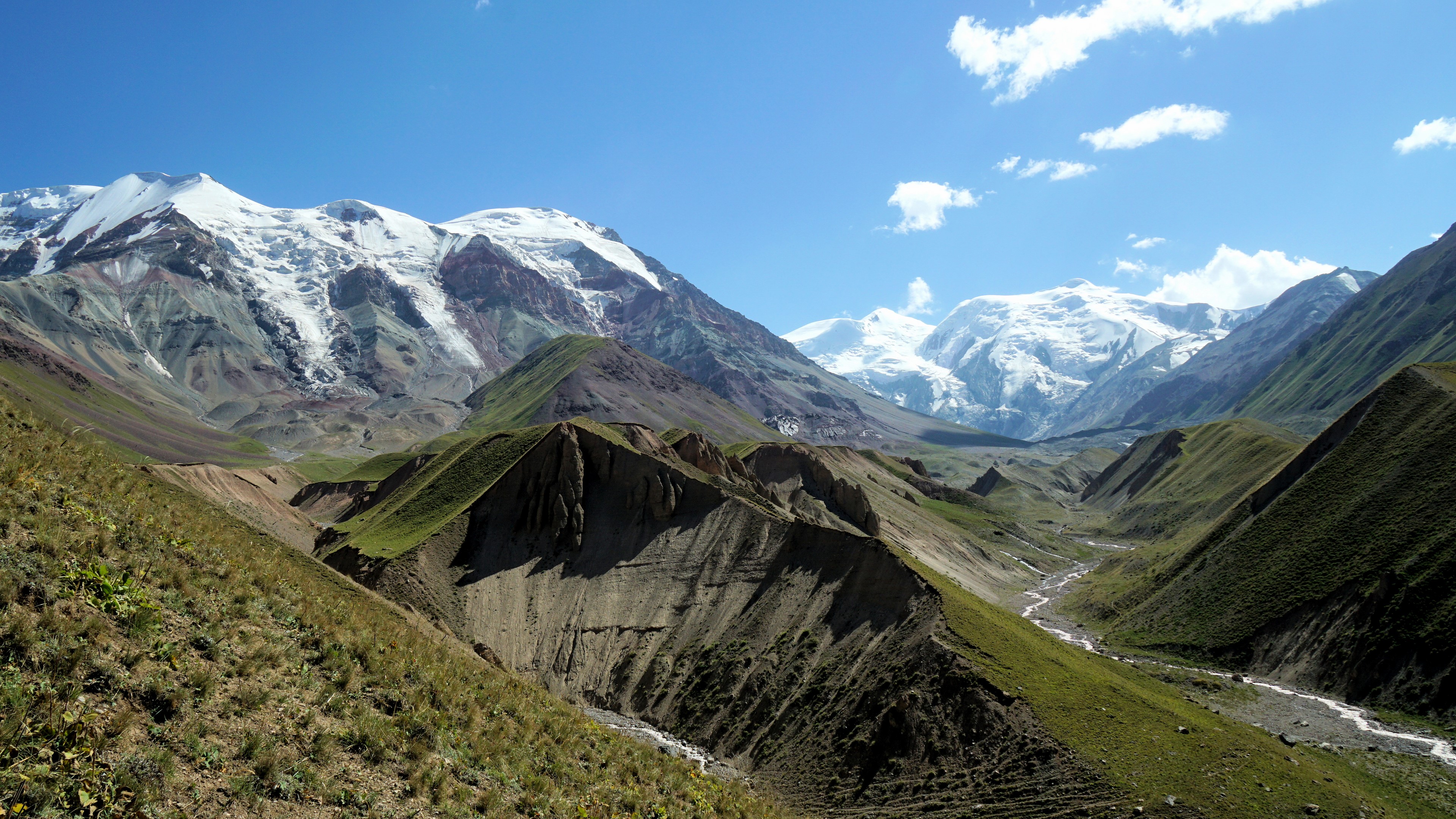
Mysterious Tien Shan
"Mountrek Ecotours" team would like to introduce you to a fascinating region perched in the middle of Tien Shan. Kyrgyzstan, a country of nomads in the due heart of Central Asia, offers largely unexplored mountains with splendid playground for all nature- and virgin-land-lovers. The Kyrgyz people who have preserved its tradition of hospitality live peacefully in a surprising variety of landscapes and have made this country the pearl of Central Asia with steppes, prairies, deserts, and also canyons, high alpine valleys, and lakes with turquoise waters. In summer, as well as in winter times, Mountrek Ecotours invites you to unpublished programs.
Program
D1 Bishkek - Chon Kemin:
After breakfast, transfer to the Chong-Kemin, which is located in the national park of the same name. Along the way, visit of the tower Burana. Lunch in Tokmok, where you can try one of the national dishes of Kyrgyzstan - manty. Then drive to the National Park of Chong-Kemin. Arriving in the village Karool Dobo. Evening walk in the countryside on horseback. Overnight in a Ashu guest house. 200 km., 3-4 hours
D2 Chon Kemin – Kochkor.
Transfer to Kochkor. Along the way, walk in the Red Canyon Konorchek.. Visit of Konorchek canyons. Lunch at the Boom gorge. Arrival and visit of handcraft center in Kochkor ,felt show, vist of his museum &souvenirs shop. Accommodation in homestay in Kochkor 120km. 2 hours.
D3 Kochkor - Son-Kul lake:
the way to Son-Kul Lake through Kalmak Ashu (3448m). Arrival to Son-Kul Lake. Then horseback riding from one tent to another by the shores of Lake Son-Kul ("Lake on the Edge"), located on the peak 3016 m. We can see the life of the nomadic people, traditions and customs of the ancestors of the Kyrgyz people. Meeting with a local family, we spend the night in yurt. (Depending on weather conditions, the night at Song Kul can be cancelled)
D4 Song Kul- Kyzyl Oi:
After breakfast, transfer to the Kyzyl Oi via Chaek through the wilderness. Stop on the way for the picnic on the shore of Jumgal river. Afternoon drive to Kyzyl Oi. Arrival and accommodation in homestay. Afternoon walk in the village. Dinner and overnight in the guest house.
D5 Kyzyl Oi - Bishkek:
In the morning, breakfast with local nomads, go through the valley of Sussamyr, Then, on the way visit of the museum and the village of famous Kyrgyz hero of the 19th century, Kojomkul. Crossing of of the huge pass of Tiu Ashu to get to Bishkek.
D6 Bishkek - International airport Manas :
Morning transfer to airport. Flight back home.
Date:
From end-May till mid-October
Price includes :
- Organization of the stay
- All transfers in vehicle incl. airport transfers
- Enlish speaking tour guide
- Full board incl. drinking water
- Accommodation described in the program
- All the visits indicated in the program
- One hour horse riding at Song Kul's lake
- Entry fees at national parks or nature reserves
- Entry fees at museums mentioned in the program.
Price does not include :
- Night in hotel after arrival in Bishkek,
- Insurance repatriation and CR insurance
- International airfare and taxes;
- Alcohol or sweetened mineral water;
- Additional services not mentioned in the program;
- Staff costs and rental of personal equipment (ATV, sleeping bag, water bottle, flashlight, etc.)
- Tips;
- Additional costs due to personal problems (health, loss of luggage, etc.).
Alpine lakes of Kyrgyzstan
“Mountrek Ecotours” team would like to introduce you to a fascinating region perched in the middle of Tien Shan. Kyrgyzstan, a country of nomads in the due heart of Central Asia, offers largely unexplored mountains with splendid playground for all nature- and virgin-land-lovers. The Kyrgyz people who have preserved its tradition of hospitality live peacefully in a surprising variety of landscapes and have made this country the pearl of Central Asia with steppes, prairies, deserts, and also canyons, high alpine valleys, and lakes with turquoise waters. In summer, as well as in winter times, Mountrek Ecotours invites you to unpublished programs.
Program
Day 1 Osh - Village Arkit:
Early in the morning, meeting with our guide to the city of Osh, and then we will go by car to the village Arkit (300 km). Preparation of national dish "Dymlama". After dinner we have a little time to get acquainted with folk music. Overnight in the guest house.
Day 2 Lake Kara-Suu:
Breakfast. We leave to the north of the village Arkit to Lake Kara-Suu, Kara-Suu on the banks of the valley can be seen with walnut trees and spruce forest. The valley becomes quite narrow, and the slopes are covered with beautiful fir. The trail passes under a waterfall and then we go up to the lake Kara-Suu (1802m, 17 km, 4 hours). This evening, we are learning to play the national card game called "The Fool". Overnight in a tent.
Day 3 Sary Chelek:
Breakfast and then continue to trek along the river Kara-Suu, where the slopes of the mountains are covered with fir forests. On the rocky road will pass through populated jailoo (mountain pastures). After lunch we cross the pass Makmal (2550m), and descend into the canyon to the river Tay Kula Sary-Chelek. After 2 km in the canyon, we will see the lake Sary-Chelek. As our guide tells the legend of the lake Sary-Chelek. Overnight in a tent. (1875m., 17km, 4-5h).
Day 4 Kechkil:
After breakfast, we leave in the Sary Chelek and we cross Ashu (2560m), where we go through spruce forests where we can observe the panoramic view of the endless ranges of the Tien Shan Mountains stretching to the horizon and even beyond it. During the descent from the pass, we will have lunch and then continue to go down through the bottom of the gorge Kechkil lake Sary-Chelek, where we will have dinner and camp overnight in tents (25 km, 6 hours).
Day 5 Five small lakes:
In the morning excursion we will go to the 5 small lakes Sary-Chelek (10 km, 2.5 hours) it will be before noon. After that we will go through the spruce and walnut woods with panoramic views. Then we go to Arkit village, dinner and overnight in a guest house (20 km, 4 hours).
Day 6 Arkit Kyzyl - Oi:
Morning after breakfast, visit to the local zoological and geological museums, and then we have a long transfer to the village of Kyzyl Oi. Lunch at Chychkan gorge. Passing through Suusamyr valley. And in the late afternoon arrival to the place of lodging. Dinner and overnight in a guest house.
Day 7 Kyzyl Oy - Son Kul
Transfer to Son-Kul valley through Jumgal iostanovka in Chaek village picnic purchase. We are moving in the valley of Kara Keche, picnic at the pass height. Spook 3380. Next to the lake and accommodation in yurt camp Tash Dobo. Walk to the petroglyphs and visit nomads. Dinner and overnight in a yurt.
Day 8: Son Kul
Day dedicated to the walk Moldo Too Mountain. Excellent panoramic view from the Moldovan peaks on both sides of the valleys. Descend and lunch at the camp. After lunch, horseback riding to the historical stones of Manas. Introduction and the story about this place. We return to the camp. Dinner and overnight in a yurt.
Day 9 Son-Kul - Chatyr Kul
After breakfast, we go on a journey through the Moldo Ashu 3,480 m. Fotostop, great panoramic view from the pass on the serpentine road Moldo Ashu and the valley Ak Talaa. The descent into the valley and drive to the village Baetovo for lunch. We continue the way to the pass OGF 3400m, (Marx, Engels, Lenin and Stalin). Further, through the cross-border road going to Lake Chatyr Kul vys.3787m. Dinner and overnight in tents or yurts.
Day 10 Chatyr Kul -Tash Rabat - Naryn - Kochkor
Transfer to Tash Rabat. Seen stone barn caravan. We continue to Naryn. Stop for lunch. After dinner, head to the Kochkor through Dolon pass 3300m. Upon arrival, accommodation in a guest house, then visit the women's cooperative: familiarization with felt production, visit of the museum and gift shop. Dinner and overnight in a guest house.
Day 11 Kochkor - Karakol
Today, we are moving along the southern shore of the pearl of Kyrgyzstan. Lake Issyk Kul is one of the most important tourist attractions of the country. Stop in the village of Kyzyl Tuu and familiarization with the production of well-known nomadic yurts. Next, we are moving to the village Bokonbaevo meeting with hereditary hunter with an eagle. Lunch in the village Bokonbaevo. We head to Karakol, visit Dungan mosque (1904-1907gg) and the Orthodox Church of the Holy Trinity (1855gg). Hotel accommodation Amir. Dinner in the city. Overnight at hotel.
Day 12 Karakol - Cholpon-Ata
Moving in Cholpon Ata. Visit of Semenovski and Grigoriev gorges, a picnic next to the lake. The descent to the highway toward our hotel. Arriving in the village Baktuu Dolonotu and accommodation in hotel Caprice. Rest and dinner. Overnight at hotel.
Day 13 Cholpon Ata - Bishkek
Transfer to Bishkek through Burana Tower (11 C) .Visit of Museum, petroglyphs and climb up on the tower.
From the tower a magnificent view to the countryside of the Chui valley and snow-covered mountains Kyrgyz Ala-Too.
Lunch in Tokmok. Moving to Bishkek and accommodation in hotel Rich. Walk around the city, visit the souvenir shops.
Dinner in the ethnographic komplehse Supara. Overnight at hotel.
Day 14 Bishkek - Manas Airport
Transfer to the international airport Manas. Flight home.
Dates: from mid-May to October
Price includes:
- Organization of stay
- All vehicle transfers incl. airport
- English speaking guide
- Full board incl. drinking water
- Accommodation as described in the program
- Carrying luggage during trekking and horse riding
- Hire of tourist equipment (tents, mats, kitchen utensils)
- All visits indicated in the program
- Entrance to the national parks or nature reserves
- Entrance to the museums mentioned in the program.
Price does not include:
- Repatriation insurance and staff of civil liability;
- International airfare and taxes;
- Alcohol or sweetened mineral water;
- Additional services are not mentioned in the program;
- Personnel costs and rent of personal equipment (high-speed bike, a sleeping bag, water bottle, flashlight, etc.)
- Tips;
- Additional costs associated with personal problems (health, loss of luggage, etc.).
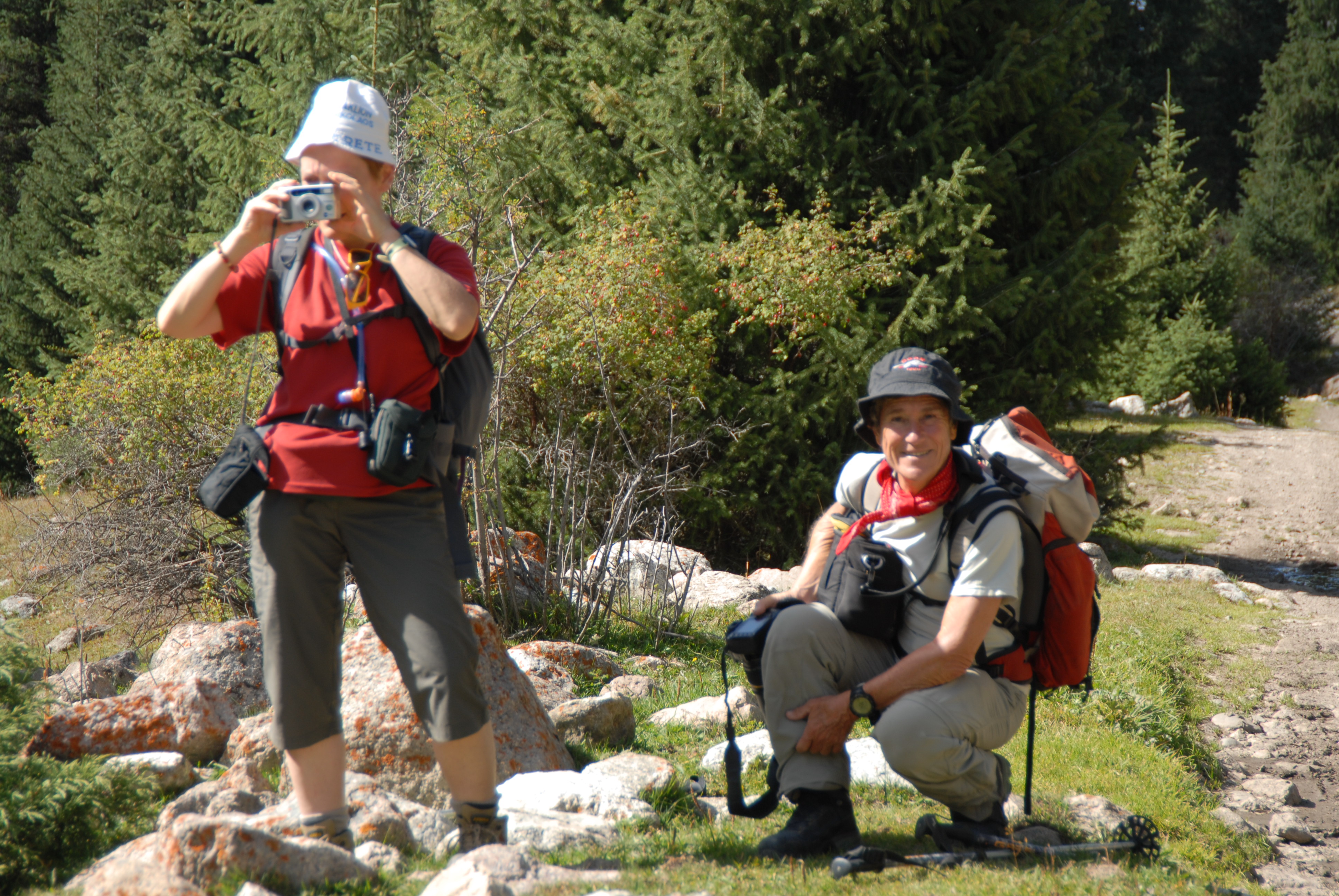
Hunters of photography
Mountrek Ecotours Team would like to introduce you to the fascinating country located in the heart of the Tien Shan. Kyrgyzstan, a country of nomads situated in heart of Central Asia, offers a largely unexplored mountains with a magnificent playground for all lovers virgin landscapes. Kyrgyz, who have maintained their tradition of hospitality peacefully live in an amazing variety of landscapes like steppes, alpine prairies, deserts and canyons, alpine valleys and lakes with colorful water, that make this country the pearl of Central Asia. As in the summer time and in the winter, Mountrek invites you to an unpublished programs. The program is designed for those who like to impress their trip by photos in an unusually beautiful landscapes.
Program
Day 1 Manas Airport - Bishkek
Reception with the airport and transfer to the capital. Accommodation at the Hotel Grand. Leisure & breakfast. Walking through the city: visit the capital's attractions memorials capital, oak park, the Victory square, Ala-Too Square. Lunch in the cafe Arzu. Visiting Osh market. Dinner at Café Jalal Abad. Night at the Hotel Grand.
Day 2: Bishkek - Suusamyr
Transfer to Suusamyr over the pass Tiu Ashu. Passing the famous tunnel on the top of pass and descent on one of the spare Congresses pass. From this place,we have a beautiful view to the wide valley surrounded by snow-capped ridges of Kyrgyz Ala-Too and Suusamyr Too. Fotostop. Descent and picnic. Drive to the village Suusamyr, then on pasture called Gates. Here we will meet hospitable family with kyrgyz yurt camp. Testing nomads food, and riding tour to the lake Kol Thor. Return and dinner. Night in a yurt.
3 day Suusamyr - Kyzyl Korgon
After breakfast we head to the village Kojomkul. Visit of the museum of the legendary giant Kojomkul, which raised huge stones weighing from 600 kg to 1000 kg. The history of Kojomkul. Following along the river Kekemeren in the direction of the river cross with river of Zhumgal. Fotostop the road. Kekemeren River is one of the fastest rivers of Kyrgyzstan, and is very popular among lovers of extreme rafting . Arrival at the camp and accommodation in tents. Dinner and overnight in tents.
Day 4 Kyzyl Korgon - Son Kul (Tulpar Tash)
Transfer to Son-Kul through the commercial and cultural center of Djumgal valley, Chaek. Stop and shop a fresh food for a picnic. Next, the path through the gorge to Kara Keche and Kara Keche coal mine. We rise to the pass of the same name. Arrival at the yurt camp, picnic. After lunch, a walk in the mountains Moldo Too, for a panoramic photo shoot. After the photo session, we will have the opportunity to ride on horseback near the lake. Dinner and overnight in a yurt.
5 day Tulpar Tash - Moldo Ashu - MELS - Tash Rabat
Today is a long transfer to Tash Rabat. Crossing the mountain range Moldo Too and his pass 3480m. From the summit, we have extraordinarily beautiful panoramic view of the valley Ak Talaa. Stop for lunch in the village Baetovo. Next we will pass another pass MELS (Marx, Engels, Lenin, Stalin) at an altitude of 3400m. Arrival in Tash Rabat and accommodation in yurt camp. Dinner and overnight at the same place.
Day 6: Tash Rabat - Naryn - Kochkor
Transfer to Naryn, Walk on the local market and dinner. After dinner, head to the Kochkor through Dolon pass 3300m.
Arrival in Kochkor and a visit of the women cooperative: felt show, visit of the museum and gift shop.
Accommodation in a guest house. Dinner and overnight in a guest house.
7 day Kochkor - the canyon Tale -Tamga
Transfer to Tamga. On the way visit of the village yurts manufacturer in Kyzyl Tuu. Familiarization with the production of the Kyrgyz yurt. Moving to the village Bokonbaeva meeting with hereditary hunter with eagles. Lunch at Bokonbaevo. Transfer to Tamga village and accommodation in a guest house. Dinner and overnight in a guest house.
Day 8 Tamga - Barskoon -Zheti Oguz
After a morning breakfast, head to beautiful gorge Barskoon. Visit the monument to Yuri Gagarin and Barskoon waterfall. Picnic. Transfer to Jeti Oguz gorge walk to beatiful panoramic overlooking to the canyon of Seven Bulls. Transfer the top of the gorge, accommodation in yurt camp Golden Yurt. Dinner and overnight in a yurt.
Day 9 Jeti Oguz - Karakol - Altyn Arashan
Moving to the city of Karakol. The city was founded by the Russian traveler N. Prizhevalskim in the first half of the 19th century. Visit the museum and the monument of Prizhevalski. Transfer to the village of Ak-Suu, then picnic, and move on to the hot springs of Altyn Arashan. Walk around the warm keys and bathing in the springs. Dinner and overnight in a yurt or hutorke Altyn Arashan.
Day 10 Altyn Arashan - Karakol
Morning swimming and moving to the Ak-Suu village, and then to Karakol. Lunch at one of the local cafes. Afternoon visit Dungan mosque and Russian Orthodox Church of the Holy Trinity. Accommodation in a guest house Atlant.Uzhin and night in a guesthouse.
Day 11 Karakol - Gorges Semenovskoe- Grigorievskoe - Cholpon-Ata
Morning drive along the northern shore of the lake. Visit Semenov Gorge and transfer to Lake Grigoriev Gorge. Picnic. Descend and drive to Cholpon Ata and accommodation Three Crown. Dinner in Cholpon-Ata. Overnight at hotel.
Day 12 Cholpon Ata - Ornok - Canyon Konorchek- Chon Kemin
Morning visit the cultural complex Ruh Ordo and Ethnographic Museum of Cholpon Ata. Moving to the village Ornok and visit the ancient petroglyphs. Transfer to Balykchy and lunch at one of the local cafes. After dinner, head to the National Park Chon-Kemin. Dinner and overnight in a guest house.
Day 13 Chon Kemin - Burana - Bishkek
Morning walk on horseback. Shuttle Buran (11th century) Dinner in Tokmok. Transfer to Bishkek. Accommodation at the hotel and rest. Visit of Osh market and souvenir shops. Dinner in the restaurant Supara. Overnight at hotel.
Day 14 Bishkek - Manas Airport
Transfer to Manas airport. Flight home.
Date:
From mid-June to mid-September
Price includes:
- Organization of stay
- All car transfers incl. airport
- English speaking guide
- Full board meals
- Accommodation as described in the program
- Transportation of luggage during trekking and horse riding
- Hire of tourist equipment (tents, mats, kitchen utensils)
- All visits indicated in the program
- Entrance fees to national parks or nature reserves
- Entrance fees to museums mentioned in the program.
Price does not include:
- Insurance and repatriation insurance CR
- International airfare and taxes;
- Alcohol or mineral water;
- Additional services are not mentioned in the program;
- Personnel expenses and personal equipment rental (ATV, sleeping bag, water bottle, flashlight, etc.)
- Tips;
- Additional costs associated with personal problems (health, loss of luggage, etc.).
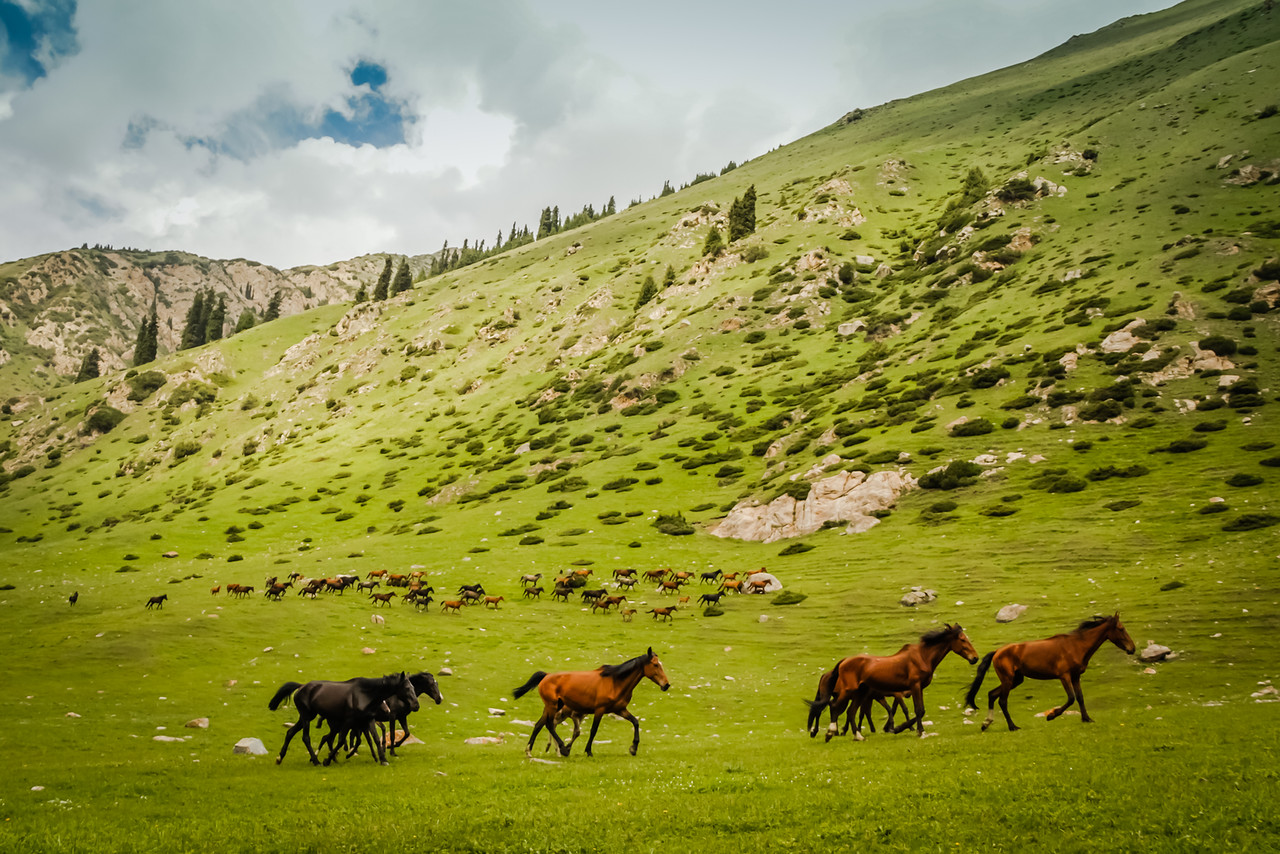
From Shamshy valley to Song Kul lake
Mountrek Ecotours" team would like to introduce you to a fascinating region perched in the middle of Tien Shan. Kyrgyzstan, a country of nomads in the due heart of Central Asia, offers largely unexplored mountains with splendid playground for all nature- and virgin-land-lovers. The Kyrgyz people who have preserved its tradition of hospitality live peacefully in a surprising variety of landscapes and have made this country the pearl of Central Asia with steppes, prairies, deserts, and also canyons, high alpine valleys, and lakes with turquoise waters. In summer, as well as in winter times, Mountrek invites you to unpublished programs.
Program
Day 1 Airport Manas/ Shamshy valley (drive time 4 hours)
Meeting at international airport Manas and transfer to Shamshy valley via Burana Tower(ancient remains of Turkish empire) Visit of petroglyphs, museum, coming up to the tower to see the panoramic view around the valley. Drive to Shamshy, arrival and picnic on nature. Afternoon walk for 5 hours. Dinner. Night in tents.
Day 2 / Shamshy valley – Camp under Shamshy pass
Departure from the campside to the east. Early this morning, you take the path on the mountainside that returns to the river (you will have to cross). Then, the trail plunges into the valley surrounded by beautiful forests. Before reaching our campin place we cross the same river several times by foot. You then hike up under the pass Shamshy. Camp at 2980m. Night in tents.
7 hours hiking
Day 3 Shamshy valley –Shamshy pass –Saralasaz pasture
This day we go up to the pass Shamshy at alt. 3500m and steep plateaus, meadows of ibex and high rocks for golden eagles. Lunch - a little late, admittedly – after the pass Shamshy (3500 m).The trail to the south leads to the another pass. If the first part of the climb to the pass is easy, the second and last part is steep and rocky. The vegetation is almost nonexistent. Only edelweiss resist this mountain environment. From the pass, overlooking the foothills of Lake Song Kul, peaks over 4400 meters, and the valley south of Kochkor. Cervical descent south towards the valley of Sarlysaz which quickly becomes a beautiful gorge in the heart of which is set up a camp of yurts. Camp nearby.
7-8 hours hiking.
Day 4 / Jailoo of Sarlysaz - Karakol River
You leave behind the camp of nomads and yurts for a wide green valley of the jailoo Sarlysaz, where huge herds of grazing sheep and horses spend the summer. Lots of yurts on the valley. We cross yurt by yurt before to cometo the river Karakol. Setting up camp at the foot of the pass Boutchouk, at 3400 meters altitude.
8 hours hiking.
Day 5 / Boutchouk Pass (3400 m)
The crossing of this pass is much easier than before. Then you go Soeik River, near which you set-up camp for one night.
7 hours hiking.
Day 6 / Massif Sandyk
This rest day allows you to share and understand the life of nomads. The guide explains the installation of the yurt, the customs of the nomads, milking mares, making kumiz, kaimak of the back pasture ... The Kirghiz are incredibly friendly, and will be happy to invite you in their yurt to share with you. Desiring to know you better, they will ask many questions about your life. For those interested, riding around the camp to explore the big pastures. You pass the massive Sandyk, following the river and join Saryk Pass (3540 meters). The vertices of Song Kul is now very close. Descent towards the valley jailoo Jumgal, another beautiful area of pastures where nomads are installed. Setting up camp in the heart of the pasture, near a village of yurts next to Kyzart pass 2664m.
8-9 hours hiking.
Day 7 / Jumgal Valley - massive Kilemche
Crossing the track Chaek Kochkor-, east-west trunk road at the pass Kyz-Art (2664 m). During the day you cross the pass of Tcharatcha (2900 m) and cross the massive Kilemche. Camp at the foot of the pass Tuz Achuu, at 2500 meters.
6 hours hiking.
Day 8 / Kilemche valley - Lake Song Kul (3000 m)
Crossing the pass Tuz Achuu (3225 m) and descend on the shores of Lake Song Kul. Important nature reserve in the country's water, it is considered like the heart of Kyrgyzstan. Nature is intact, the places are beautiful. The region seems peaceful, but sometime wolves disrupt the life of nomads. Camp on the north shore of the lake.
6 hours hiking.
Day 9 / Song Kul Lake - Bishkek
Transfer Song Kul – Bishkek via Kochkor. Visit of local handcraft center to see the felt show, souvenirs shop and local museum. Afternoon drive to Bishkek. Arrival and accommodation in guest house**.
Day 10. Morning transfer to international airport Manas. Flight back to home country.
Date:
From mid-June till mid-September
Price includes :
- Organization of the stay
- All transfers in vehicle incl. A / R airport
- English speaking tour guide
- Full board incl. drinking water
- Accommodation described in the program
- Carrying luggage during trekking and horse riding
- Rent camping equipment (tents, mats, kitchen utensils)
- All the visits indicated in the program
- Entry fees at national parks or nature reserves
- Entry fees at museums mentioned in the program.
Price does not include :
- Insurance repatriation and CR insurance
- International airfare and taxes;
- Alcohol or sweetened mineral water;
- Additional services not mentioned in the program;
- Staff costs and rental of personal equipment (ATV, sleeping bag, water bottle, flashlight, etc.)
- Tips;
- Additional costs due to personal problems (health, loss of luggage, etc.).
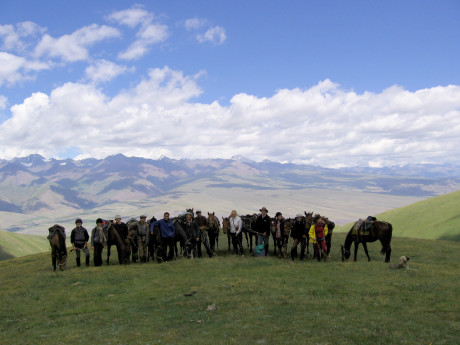
Riders of Celestial Mountains
This tour is going to give you the possibility to enjoy the amazing beauty of Central Tien-Shan mountains, to see one of the most magnificent mountain lakes, to indulge in your hobby of horse-back riding, and last but not least, to get acquainted with the ancient culture of Kyrgyz nomads, that is still alive today in their Djailoos (summer alpine pastures) where you will be welcomed with warmest hospitality and invited for everything they have in their yurts (Kyrgyz national dwelling).
Program
Day 1: Bishkek (ca.35 km).
Arrival in Bishkek. Transfer to the Guest House, rest and then breakfast. Sightseeing city tour (the bazaar, the central square Ala-Too with the Historical Museum if we will have a time). Lunch. Free time. Dinner at the restaurant. O/N at the GH.
Day 2: Bishkek – Kochkor – Sarala-Saz (ca.250 km).
After breakfast drive to Kochkor. On the way, visit Burana tower near Tokmok city. Lunch in a small restaurant along the road. After lunch , visit of Kochkor city (the economic centre of Kochkor region) we go to Jailoo Sarala-Saz by car (app. 1,30 hour). There we meet the family that is lending us their horses for the trip. Night in the yurt.
Day 3: Sarala-Saz – Karakol( 21 km - 6 hours)..
Breakfast and we start of our horse-back riding trip. We leave at about 10:00, riding over alpine meadows where you see a lot of different yurts. We arrive at Jailoo Karakol in the afternoon. We are awaited by the family with kymyz, the national drink made from fermented mares milk. Dinner. Overnight in the tents.
Day 4: Karakol – pass Buchuk – Soek (5-6 hours riding).
We leave the Jailoo at about 10:00 after breakfast. We go down to the valley Irizuu over some hills. We start our way up the mountain to reach Buchuk. Lunch. Then we go up to Jailoo Soek, which is situated on a place of breathtaking beauty. At the Jailoo, we have tea as usual and a traditional dinner. Overnight in the tents.
Day 5: Soek – pass Saryk – Kolduusuu (6 - 7 hours riding).
Breakfast. We start at about 10:00 to conquer the pass Saryk(3480m). A bit further up, we have a perfect view on the surrounding snow-covered mountain ranges and some neighboring valleys. From there on, we start to get up to the pass. We plan to go down by a gorge produced by a small mountain river. After the descent, we have a rest on a small elevation on the slope, where there are some rocks in the back. Picnic. In the afternoon, we arrive to Jailoo Kolduusuu, where we will camp. Overnight in the tents.
Day 6: Kolduusuu – pass Chaararcha – Tuz Ashuu (5-6 hours riding).
We get up at about 08:30 and after breakfast start to cross some hills (and also the border between Kochkor and Naryn region) to arrive at the Jailoo KyzylKia. Afterwards, we cross the pass Chaararcha(3000 m), and then on the gorge of Kilemche we have lunch and go to the camping at the Jailoo Tuz Ashuu, which is situated in alpine meadows with the most beautiful mountain flowers you could imagine. This day is a shorter one, with only about 5 hours on horse, so it will give you some time to rest on the Jailoo and to recollect your energies. Dinner and overnight in the tents.
Day 7: Tuz Ashuu – SonKul (5-6 hours riding).
We start our adventure about 10:00. On the top, you can catch the first view of Son Kul (3016m), of its waters between green hills. We can have a rest in a yurt and some tea and a snack for lunch. In the late afternoon, we do the last part of our tour around the mountain lake. Dinner.Overnight in tents on the north part of the lake.
Day 8: Son-Kul – Kochkor – Issyk Kul (ca.250 km).
After breakfast we drive to Kochkor, where we can see wool exhibition in womens cooperative.We lunch here, then we can see little national museum and shop the souvenirs. At 15 h we continue our trip to Issyk Kul to the second biggest mountain lake on altitude of 1600 above the sea level, which is situated between two the picturesque celestial mountains of Kungei and Teskey Ala Too. Here you can see the real wild beach of rural environment and where we will enjoy swim in the lake. Overnight in tents.
Day 9: Issyk Kul – Tokmok - Bishkek (ca. 255 km,6h).
After breakfast drive to Bishkek via Tokmok. Lunch on the way. Arrival in Bishkek and accommodation in the same GH “Aibolot”. . Then visit of mainly tourist interested places for shopping. Dinner at the restaurant. Night in the GH.
Day 10: Departure. Transfer to the airport.
Price includes:
- Organize your stay
- All transfers vkl.aeroport
- English-speaking guide
- Equestrian tour guides and horses rental
- Breakfast incl. drinking water
- Accommodation described in the program
- All visits indicated in the program
- Entrance fees to national parks or nature reserves
- Entrance fees to museums mentioned in the program.
Price does not include:
- Insurance repatriation insurance and CR
- International airfare and taxes;
- Alcohol and mineral water;
- Additional services are not mentioned in the program;
- Additional costs associated with personal problems (health, loss of luggage, etc.).
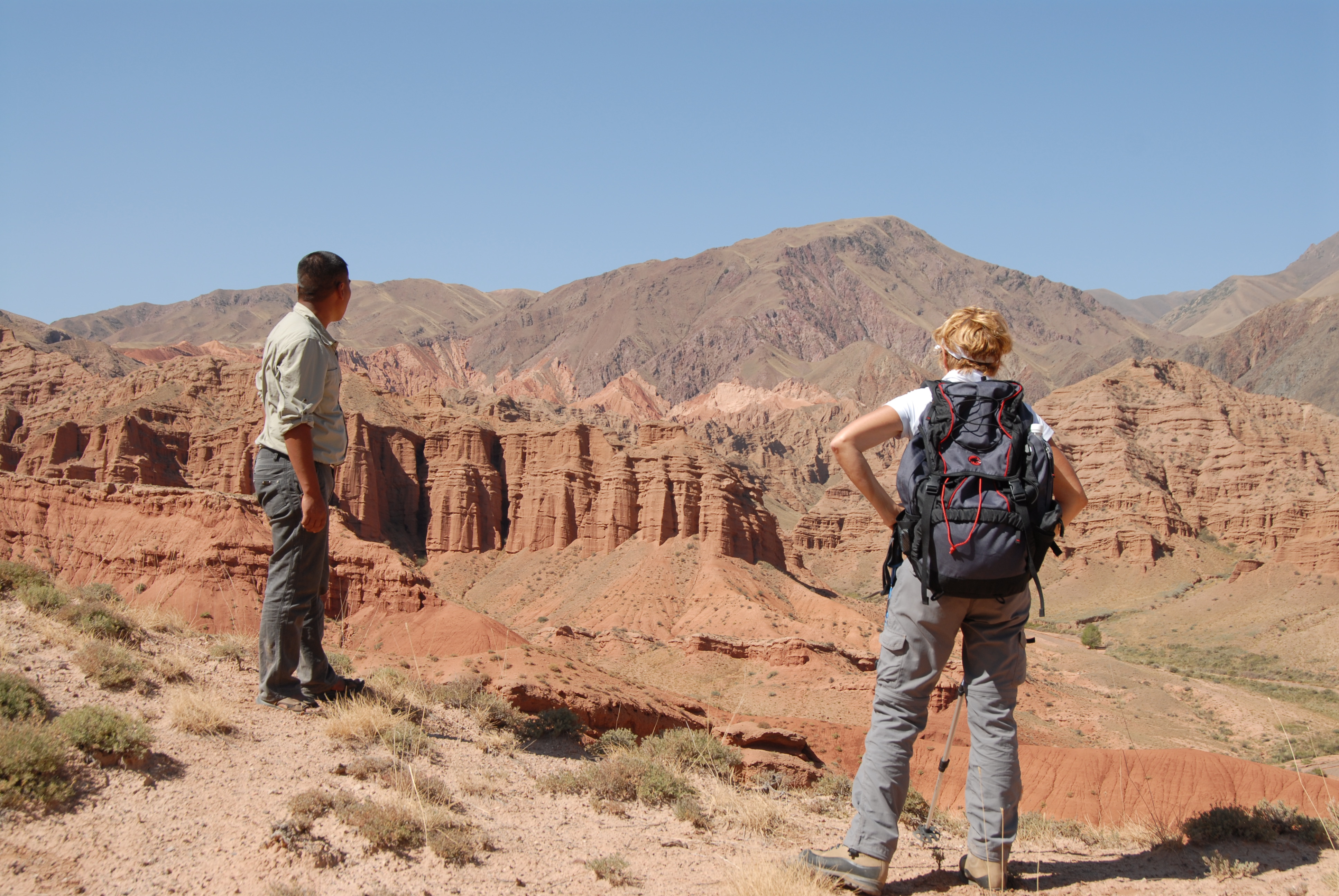
On the footsteps of Tien Shan nomads
At the heart of a still raw and wild, this trip to profile very alpine, offers an in-depth discovery of central Kyrgyzstan. The contrasts between the ocher rocks, the green pastures and sparkling glaciers offer unforgettable landscapes and moods. The home of nomads who spend the summer between lakes and glacial peaks is exceptional, which, today, remains a true "must"! A nice mix of both travel and tours
Program
Day 1: Flight from home country
Flight from home country to Bishkek.
Day 2: Bishkek Transfer> Burana, Chon Kemin
Arrival in Bishkek, transfer to hotel for some rest. Breakfast around 9 am, then drive to Burana, former capital of Central Asia. Discovery of archaeological site preserving some vestiges of the ninth century, the tower that measured at the time, 45 meters is actually only 25! A small museum nearby contains the remains of the day ... Drive to the National Park Chon-Kemin, established in 1997 ... Journey to the heart of the park through a typical nature. Night in a guesthouse in the heart of a village surrounded by mountains up to 4700 m.
Day 3: Transfer> Canyon Konorchek, Tamga (2780 m)
Road to the canyon Konorchek for a ride of 2 hours, with some steeper sections (narrow) but without difficulties, to a large clearing colorful with beautiful eroded rock forms ... Continue on to Lake Issyk Kul (warm lake), the second largest mountain lake in the world after Titicaca. This is the main attraction of Kyrgyzstan. By the south bank with its desert landscape at the foot of the chain of Terskey Alatoo culminating at 5200 m, the route leads to Bokonbaeva. Stop at a manufacturer of yurts and meetings with the eagle hunters lifestyle yet traditional. Continuation (1h) to the village of Tamga. Dinner and overnight at the inhabitant ...
Day 4: Transfer> Chon Kyzyl Suu, Kasha Toer (2640 m)
Starting on the shores of Lake Issyk Kul to Kyzyl Suu (Red River). Visit the bazaar and transfer to the valley floor of Chong Kyzyl Suu (the big river red). Start trekking to 2230 meters and picnic near hot springs. Continued to join the old Chong Kyzyl Suu station and set up camp beside the river Kashka Toer in a beautiful green plain at the foot of mountains and glaciers ...
Day 5: Trek> Jety Ogyz (3225 m)
By a steep path between the rhododendrons, the laces meet the pass Archa Toer located at 3870 meters at the top of a beautiful valley, home to many marmots. Picnic below the neck. Descent into the valley of Jeti Oguz steeper on the high part and set up camp for two nights.
Day 6: Trek> Exploration in the valley of Jeti Oguz (3225 m)
Day of rest or exploration to the peak Oguz Bashi (bull horns). Ride to and from the foot of the mountain glaciers whose peaks rising to 4750 meters.Beautiful waterfalls of ice ... Same camp as yesterday.
Day 7: Trek> Base Teleti Col (3000 m)
Going down the valley to the confluence Jeti Oguz Valley Teleti. From there, climb in the valley and forest clearings between Teleti. Then again in the mountain pastures to reach the foot of the pass and set up camp around 3000 meters. This easy day walking in the countryside, can take the time to find out more about the traditions and nomadic life in the yurt.
Day 8: Trek> Teleti Col (3800 m), river Karakol (2530 m)
Teleti ascent of the Col (3800m): long climb in the mid-altitude meadows, gradually takes over the rubble to finish in a rocky chaos left by the ancient glaciers of passage. From the pass, beautiful view on the massif Oguz Bashi. Descent into the valley between boulders and rhododendrons Teleti to achieve a beautiful alpine area. End of the descent through the trees and set up camp beside the river Karakol.
Day 9: Trek> Sirota Hut (2980 m)
Morning dedicated to the encounter with the shepherds before descending into the valley of Karakol. Meals and supplies. Karakol river crossing on a bridge and then, in the forest, walk to Sirota, whose name means "isolated".
Day 10: Trek> Lake Ala Koel and Col (3810 m), Keldike (2580 m)
Ascent Lake Ala Koel (Lake mâchuré). The trail around the lake, one of the finest chain Terskey Alatoo. The route becomes more difficult climbs and a steep scree collar Ala Koel to 3810 meters. From the pass, the view is absolutely gorgeous lake and surrounding peaks. At the bottom the peaks of Karakol Djighit peak above 5000 meters with magnificent glaciers .... Descend a colorful valley to camp in the valley of Keldike of Altyn Arashan.
Day 11: Trek> Altyn Arashan (2540 m)
Morning hike round-trip to the valley floor of Altyn Arashan, if possible to the junction of the valleys, where we discover the fabulous wall of rock and ice of the Aksu Wall culminating at 4700 m with over 1000 meters almost vertical. Return to camp for lunch and descent of Altyn Arashan sanatoriums. Free time to enjoy the hot springs. Night at the refuge at 2540 meters.
Day 12: Trek> Aksu, transfer Karakol (1800 m)
Further descent of the beautiful gorges of Altyn Arashan and meals at the bottom of the valley. Transfer to Karakol. Installing with local families and visit the Orthodox Cathedral, built entirely of wood and in the late nineteenth century. Overnight in Guest house.
Day 13: Transfer> Kochkorka (2000 m)
Morning visit the memorial Prejvalski. Departure for Kochkorka by road (265 km) north of Lake Issyk Kul. Along the way, picnic and visit the Ethnographic Museum in Cholpon Ata. Baliktchi passage and continuation to the south along the artificial lake Tokoi Orto. Installing with the locals.
Day 14: Transfer> Lake Song Kul (3090 m)
Transfer to Song Kul Lake located 3000 meters until ... Route Kalmak Ashu pass (3346 m). Cervical, walk towards the lake by a small valley, stop near an ancient sacred site dating perhaps from the sixth century BC.Continue to the yurts of Altyn Tchach (golden hair). Free time to meet with Kyrgyz nomads. Traditional meal and night in a yurt.
Day 15: Trek> Song Kul (3090 m)
Hiking in the hills of the lake. Climb to the peaks for a view of the peaks of the massif of Moldova. Descent to the lake passing by some interesting petroglyphs. Arriving near the lake instead of Tash Doeboe sacred. Back to our jailoo (yurt camp) for a second evening with nomads.
D16: Transfer> Kyzyl Korgon (1400 m)
Transfer to Pass Kara Ketche (3380 m) and descend to a coal mine in the open. Continuation to the forest to lead a large grassy valley. Road to Chaek and down the gorges of the Kekemeren to the banks of Kyzyl Korgon. Setting up camp at the foot of red sandstone cliffs. Showers under a waterfall.
J17: Trek> Red Canyon, Kyzyl Korgon (1400 m)
Round-trip hike in the magnificent gorges of the canyon red. The path is sometimes difficult to sheep via footpaths to reach small hamlets across desert landscapes, just colored gray-green grass. Return to camp.
Day 18: Transfer> Sussamyr, Bishkek (700 m)
Long day of transfer to the capital (290 km). The road crosses the canyon Kekemeren up the upper valley of Sussamyr to 2200-2500 meters. En route visit the house of a national hero, died in 1955, which weighed 230 kg for 2m20. According to legend, he raised the huge boulders of stones weighing 0m 600 to 1200 kg.
Day 19: Bishkek
Visit the historical museum and walk through the monuments of the city. Lunch at Arzu and afternoon visit of Osh Bazaar, the actual concentration of the various nationalities in Kyrgyzstan ... Dinner in the city.
Day 20: Bishkek - Manas Airport.
Transfer to the international airport Manas, and then fly back to France.
Price includes:
- Organization of stay
- All transfers incl.airport transfers
- English-speaking guide
- Full board incl. drinking water
- Accommodation described in the program
- All visits indicated in the program
- Entrance fees to national parks or nature reserves
- Entrance fees to museums mentioned in the program.
Price does not include:
- Insurance repatriation insurance and CR
- International airfare and taxes;
- Alcohol and mineral water;
- Additional services are not mentioned in the program;
- Additional costs associated with personal problems (health, loss of luggage, etc.).
Alpine lakes of Sary Chelek
Discover lost in the middle Tien Shan region. Mountrek Ecotours and his team will present the new program. With the agility of Kyrgyz horses, mountains and rivers you cross the border with China. You will meet the Kyrgyz nomadic people who surround you with its two thousand year culture. This hike horse satisfy all the desires of enthusiasts jumper between epic traditions, history of the Silk Road and fascinating landscapes.
Sary Chelek is a UNESCO bioshpere reserve, 600km from Bishkek and 340km from Osh. The name "Yellow Jar" in Kyrgyz come from the main lake of the region, and the second deepest of the country after the Issyk Kul lake. It's surrounded by other small lakes in the middle of one of the three most important walnut forest of Kyrgyzstan. The rich variety of flora and fauna is another important facet of this area.
The program start from the Arkyt village at 1300m., east-side of the main Sary Chelek lake, and will finish into the Sary Chelek valley till the Arkyt village and main entrance of the park. The level of difficulty is moderate and open for amateur or beginner, and can be adapted for horseback riding lovers. The highest point is the Makmal pass at 2655m.
Program
Day 1 Osh - Village Arkyt: Early afternoon, meeting with our guide in Osh city, then transfer by shared taxi to Arkyt village (300km). Preparation of local meal "Dimdama". After dinner we have a small musical arrangement. Overnight in homestay.
Day 2 Kara-Suu Lake: Breakfast. Setting off northwards from Arkyt village to the Kara-Suu Gorge, along the banks of the Kara-Suu River and in the middle of walnut and fir forest. The valley becomes rather narrow and the slopes are covered with a beautiful silver fir forest. Further on the track passes below a waterfall and then we climb to Kara-Suu Lake (1802m, 17 km, 4 hours). This evening, we will learn how to play the local card's game named "Durak" ("the Fool" in Kyrgyz). Overnight in tent.
Day 3 Sary Chelek Lake: Breakfast, then continue the trek along the Kara-Suu river where the slopes of the mountains are covered with silver fir forests. The stony road winds through inhabited
jailoos (mountain pastures). After lunch we cross the Makmal Pass (2550m), and descend into the Kula Taï canyon till the Sary Chelek river. After 2 km into a canyon, the landscape open on the main Sary Chelek lake. Tonight our guide will explain legends of the Sary Chelek lake. Overnight in tent. (1875m., 17km, 4-5h).
Day 4 Kechkil: After breakfast, we leave the bank of Sary Chelek lake and we cross the Ashuu Pass (2560m) where we ride through fir forests and have a panoramic view of the infinite ridges of the Tien-Shan Mountains stretching to the far horizon and beyond. During the descent from the pass we will have lunch and then continue down through the Keshkil gorge to the bottom part of Sary-Chelek Lake where we will have dinner and camp overnight in tents (25 km, 6 hours).
Day 5 Five small Lakes: In the morning excursion to the 5 small lakes of Sary-Chelek (10km, 2,5 hours) till noon. After this we will continue on through the fir and walnut forests enjoying the panoramic views on the way to Arkyt village for dinner and overnight in a homestay (20km, 4 hours).
Day 6 Arkyt - Osh: In the morning after breakfast, visit of the local zoological and geological museum, then transfer with our guide to Osh by shared taxi. Arriving at midday in Osh. (end of the program, lunch not included).
Period: from 15th of May till 30th of September
Price includes :
- Organization and logistic of tour,
- Local guide (basic English speaking) from Osh to Osh
- Transportation to Kara-Suu village and from Arkyt village by shared taxi with our guide
- Horse guide,
- Full board (from dinner D1 to breakfast D6), cooked by our guide.
- Accommodation in homestay D1 and D5,
- Rent of horses,
- Permit entry and tent permit for Sary Chelek biosphere reserve
- Musical arrangement
Price doesn’t include :
- Travel insurance,
- Cook,
- Air tickets,
- Alcohol or minerals waters.
Notes:
- This trip has been designed for experienced riders.
- During the trip, the average altitude is 2200 m.
- The weather is usually sunny but can be harsh. We strongly recommend that you have adequate equipment to deal with storm, snow, rain and hail. Nights can be chilly.
- Have repatriation insurance.
- No visa is required for citizens of USA, UE, Japon and Canada citizenship. (total of 59 countries, up to 60 days, 6 month passport validity) www.mfa.kg
- This program can be changed in cases of changes in schedule of flights, weather conditions and other unforeseen conditions.
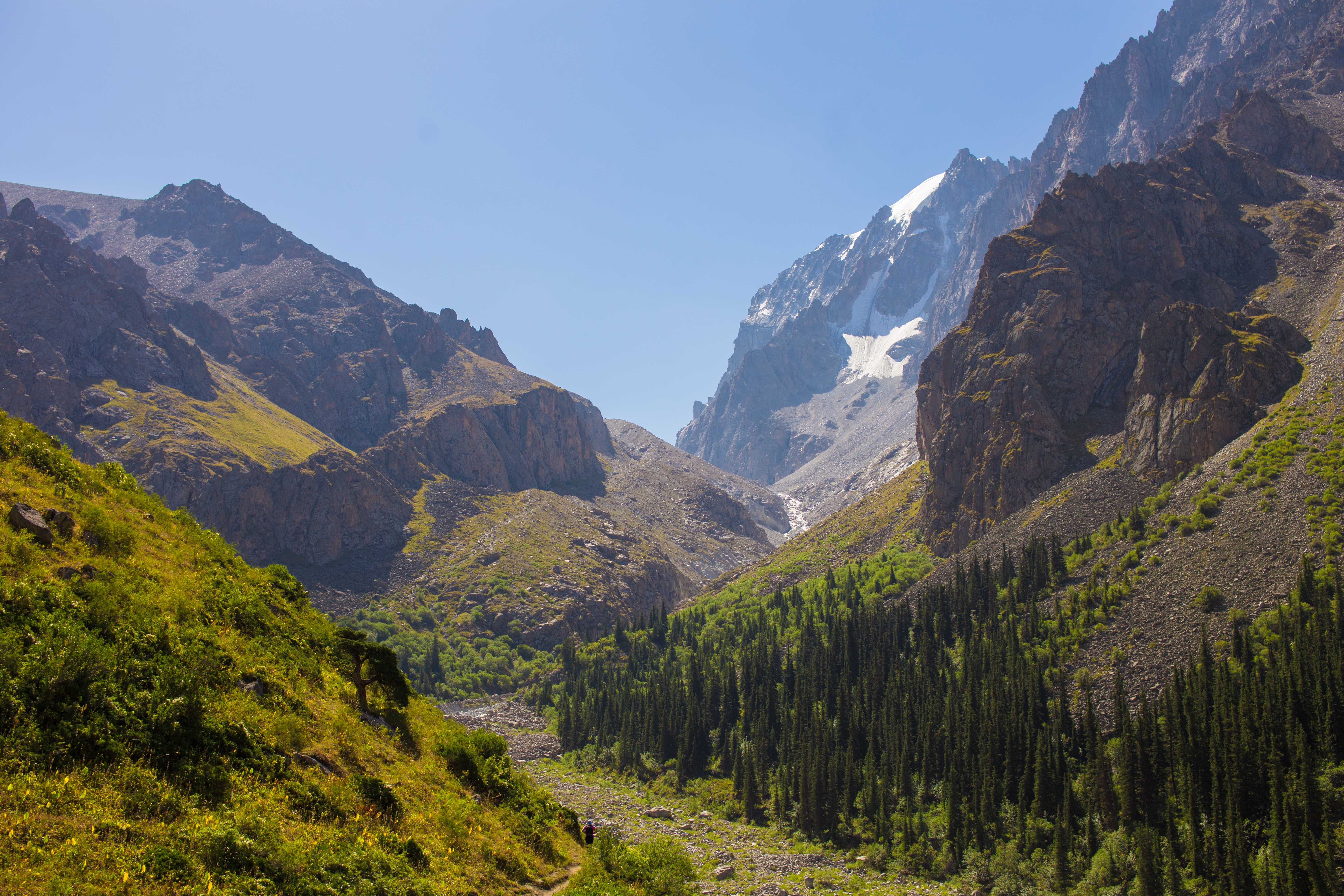
National Park Ala Archa
We invite you to spend your weekend in this popular place for your leisure time. The Ala-Archa National Park was created in 1976 and occupies about 120.000 hectares just 40 km from the capital. Ala-Archa is translated from Kyrgyz language as “motley juniper”, and once you have hiked in the gorge with its velvet green slopes, stony mountain rivers and towering peaks, you will understand why. Along the way you can stop for a nice picnic in a shady grove of larch and pine trees. Here you can leave all your problems behind…
Ala Archa
- 40 km from Bishkek
- hiking
8:30 Depart from Bishkek
9:30 Hiking along the Ala Archa valley, visit of the waterfall
12:00 Lunch
13:00 Hiking
15:00 Drive back to Bishkek
17:00 Arrival to Bishkek
Note: This program can be prolonged according to your desire.
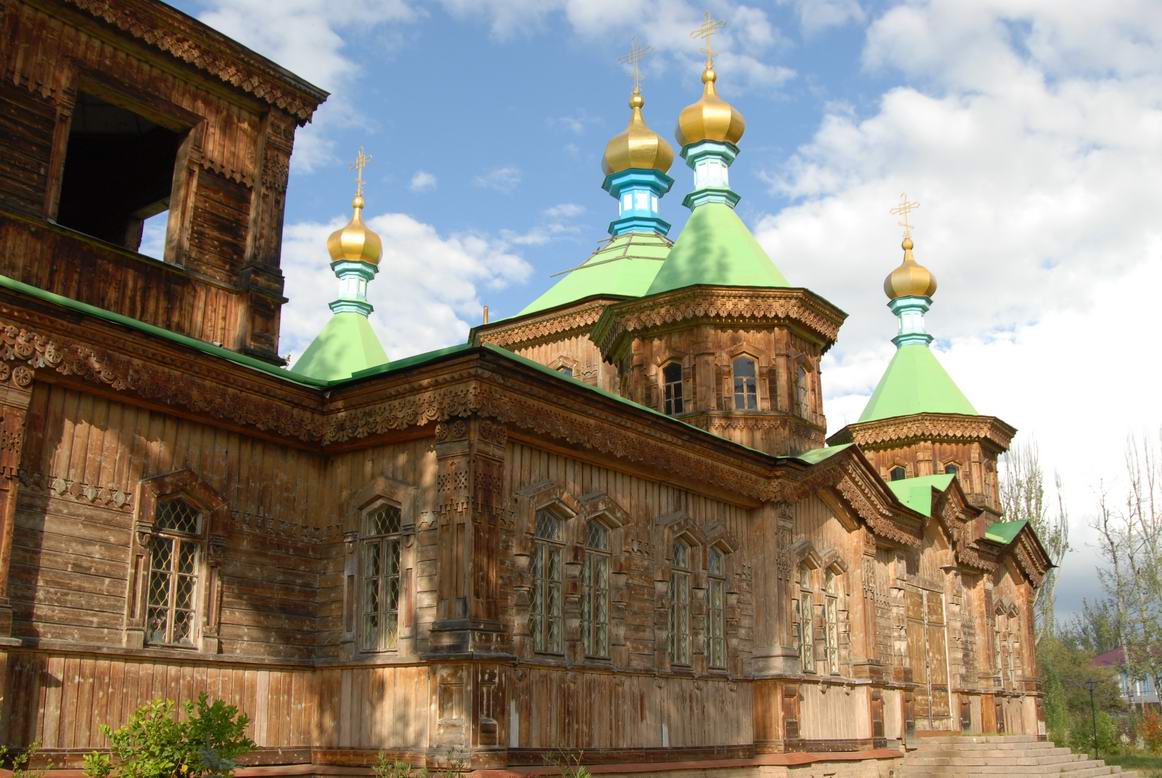
By the modern Kyrgyzstan
Mountrek Ecotours and its team would like to present a region situated in middle Tian-Shan. Kyrgyzstan, the country of nomads located in the center of Central Asia, offers widely unexplored mountains. Kyrgyz people, who keep the tradition of hospitality, live peacefully inside landscapes of a surprising diversity of landscapes (meadows, deserts and also canyons, high alpine valleys, steppes, lakes in waters turquoise), which makes the country the pearl of Central Asia. In summer as in winter, Mountrek invites you for the unpublished programs. We invite you to this program "discovery" for lovers of cultural visit, who are in love with unusual landscapes and virgin culture.
Day 1: Bishkek
Meeting at Manas International Airport and transfer to the capital city of Kyrgyzstan, just a 30-minute drive from the airport. This entire day is dedicated to a guided tour of Bishkek. It includes visiting Victory Square (Jenish Square), Duboviy Park (Oak Park), Central Ala-Too Square, the History Museum, National Philharmonic, and many others places of interest. But no tour of Bishkek is complete without visiting our Asian Bazaar! We will show it to you today and you will be able to take a lot of dynamic photos of bustling local life. This bazaar is a noisy and colorful tapestry of fabrics, produce, and people selling and buying goods. Traditional dinner will be served at 7 p.m. You will spend the night in a hotel.
Day 2: Bishkek - Chon Kemin
Today you will be transferred to Chon Kemin gorge. On route to the gorge you will visit Burana Tower (an 11th century minaret) and an open air museum of Balbans (stone warriors). After an interesting excursion and climbing on the top of the tower is transfer to Chon Kemin gorge. Here you will meet a nice family that will prepare a traditional lunch for you. In the afternoon we will have 3 hours of horse riding. Your route will go high in the mountains and you will even ride horses through a mountain forest. On the top you will see the panorama view of the gorge. The night and dinner will be in a home stay.
Day 3: Chon Kemin - Issyk Kul lake
Today we drive to the celestial Issyk Kul Lake, the second largest alpine lake in the world (1608m.above sea level). Its length is 180 km and it is 60 km wide. The lake is called "the pearl of Central Asia". For more than 1 500 years local people considered the lake to be a sacred one. Thanks to the salty water, Lake Issyk Kul possesses curative qualities. You can come up to the lake and to see mountains all around it. At Soviet period the heads of governments had their houses near the lake to have a rest. Your dinner will be in a local restaurant. Night is in a hotel.
Day 4: Issyk Kul lake - Karakol
The day starts with a breakfast at 8 o'clock. Afterwards, you will start your trip to Karakol city. On the way, we will take a short break to give you the opportunity to visit ancient stone inscriptions (dating back to 800 B.C.). These petroglpihs were made more than 2 000 years ago by shamans. Then we continue our way along the northern shore of the lake to the town of Karakol. You will visit the Dungan mosque. One of its highlights is the fact that it was built in a Chinese style without using a single metal nail. The mosque will be followed by a visit to an old wooden Orthodox Church. The night is spent in a guesthouse.
Day 5: Karakol - Jeti Oguz
Today we will drive to Jeti Oguz gorge. It's famous for its red rock formations that are called the Seven Bulls - Jeti Oguz. Also you will see Broken Heart Mountain. We will take as many photos there as you'd like and if you want it is possible to walk to the top of a mountain (20 minutes) to see a panoramic view of the gorge! There are yurts in the gorge and people can offer you Kumis to drink. It is a national drink that is made from fermented mare's milk, and it is mildly alcoholic. Your dinner and night will be in nomadic felt dwellings, yurts.
Day 6: Jeti Oguz - Bishkek
Today we will drive to Bishkek city. This time we will drive along the southern shore of Issyk Kul Lake. This is a great chance to see the whole lake from all sights. We will have a visit in Bokonbaeva village, where we meet a local eagle-hunter. There are still some people in villages that continue this ancient way of hunting in our days. They train eagles and hawks when they are young and every winter go with them to the mountains for hunting. You will find out many interesting facts about this way of hunting and you will be able to take photo while keeping the bird on your hand! Dinner will be in a restaurant in Bishkek. Night is in a hotel.
Day 7: Airport
Morning transfer to airport Manas. Flight back to home country
Price includes:
Оrganization of stay
All car transfers incl. airport
English speaking guide
Full board incl. drinking water
Accommodation described in program
All visits described in the program
Entrance fees to national parks or nature reserves
Entrance fees to museums mentioned in the program
Price does not include:
Insurance repatriation insurance and CR
International airfare and taxes
Alcohol
Additional services which are not mentioned in the program
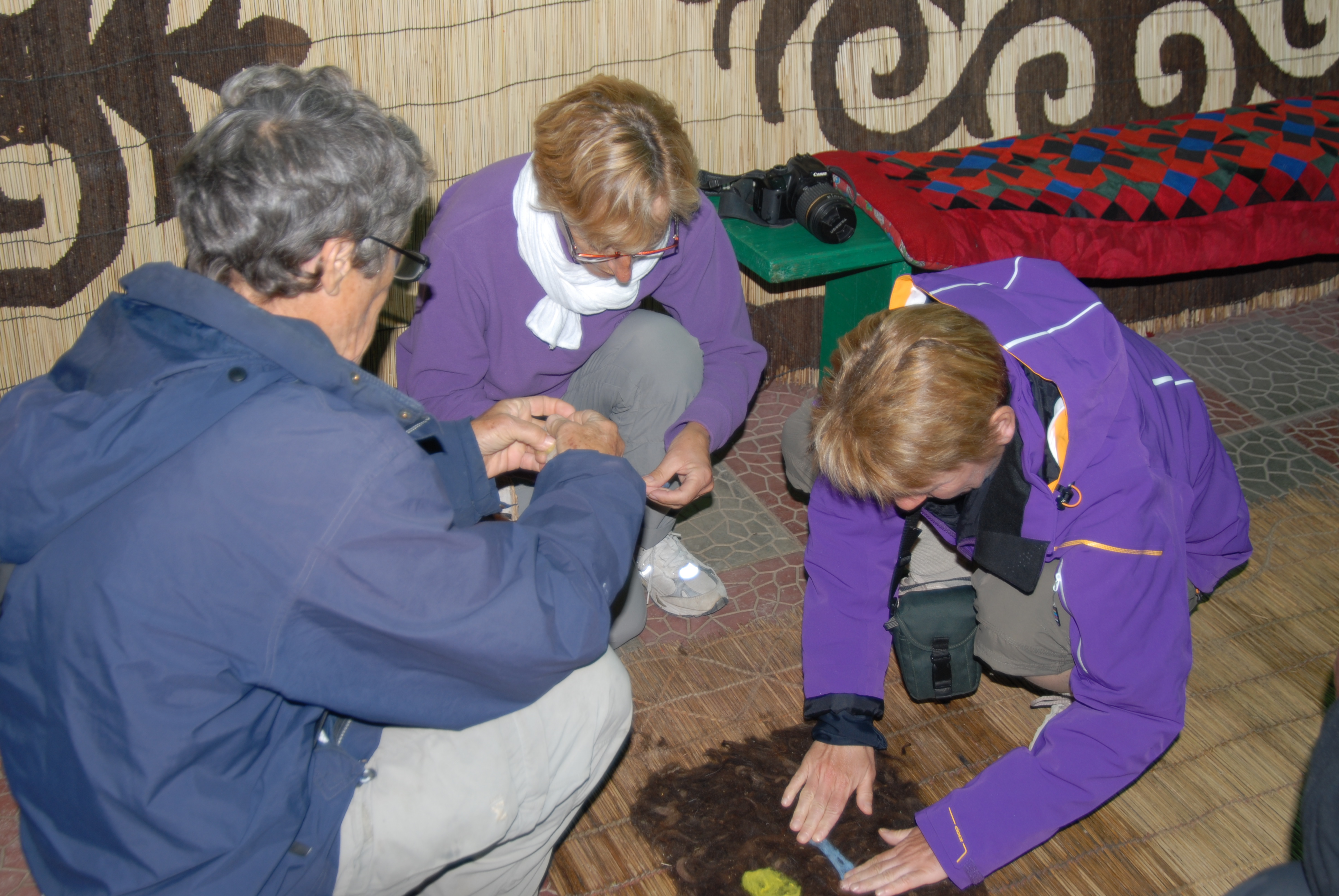
Pearl of Central Asia
We will help you to discover Kyrgyzstan, a unique country lying in the heart of the Tien-Shan Mountains. It is a land of contrasts offering multitude of spectacular landscapes: wide steppes, green fields, sandy deserts, turquoise lakes, snowy mountains, fast rivers, an abundance of wild life with many rare and endangered species, historical and archeological places connected with the Great Silk Road and people preserving the traditions of their nomadic ancestors. All this makes Kyrgyzstan a pearl of Central Asia.
Program
D1 Bishkek: Meeting at the Manas Airport and transfer to the « green » capital of Central Asia. City- tour.: Dostuk Square, Theater Square, Oak Park, State Historical Museum. Lunch at Dlalal-Abad Cafe. In the afternoon visit of Osh bazaar, a huge market, a mixture of different colors and fragrances. Overnight at Hotel **.
D2 Bishkek-Chong Kemin: After breakfast, transfer to Burana Tower, visit of museum,petroglyphs and go up to the tower to see the panoramic view surrounding us. Transfer to Chon Kemin National Park and picnic on the shore of the river. Afternoon, we drive to local family homestay, option to ride on horseback or walk in the village to see the local rural life. Dinner and night at homestay.
D3 Chong Kemin - Karakol: After breakfast setting off for the east of the Issyk-Kul lake (more than 1600m above the sea level), to Karakol, a town founded in the 19th century as a Russian garnison where a famous Russian explorer Prjvalky lived. On the way walk in scenaric red canyon of Kyzyl Terek (2h walk). In the afternoon getting to Karakol, where we will see the Dungan Mosque and the Holy Trinity Cathedral in order to understand the life of Kyrgyz people in the 19th century. Overnight at Elite Guesthouse or Amir Hotel (***).
D4 Karakol – Djeti-Oguz: After breakfast visiting the Memorial Complex of Prjvalsky in Karakol and a huge Karakol bazaar where we will try shashlyk (shish kebab) and traditional Ashlyanfu. Opportunity to buy dry fruit and honey. In the afternoon drive to Djety-Oguz valley through a wild nature road. Hiking around the Red rocky cathedral of Kyzyl Unkur (2 hours), then arriving at "Koek Jayik" meadows. Overnight in yurt.
D5 Jeti-Oguz - Kochkor. Drive to Kochkor along the southern cost of the lake. On the way stop and walk at Manjily-Ata springs. Lunch in Sagymbek’s house, a famous hunter with golden eagles in Kyrgyzstan. After lunch walk in the "Fairy Tails canyon" and drive to Kochkor. Visit of the Handicraft museum. National folklore concert. Overnight in homestay.
D6 Kochkor, excursion to Koel Ukok lake : The Koel Ukoek is a nearest lake of the Kochkor village, we will drive a small hour to join the lake, then we will walk around the lake having lunch in a traditional yurt camp. Possibility to walk afternoon a glacier lake or near surrounded glaciers. End of the afternoon, drive back to Kochkor village. Overnight in homestay.
D7 Kochkor - Son- Kul : In the morning after buying food drive to the Son-Kul Lake via Kalmak Ashu Pass (3448m) .Arrival at the Son-Kul Lake. Then walk (2h) from one yurt to another to the Son-Kul Lake (“Last Lake”), situated at the high of 3016. We can see the life of nomadic people, traditions and customs of Kyrgyz ancestors. We meet a Kyrgyz family that hosts us in their yurt for a night.
D8 Son-Kul lake: Getting up early for taking the cattle to the mountains, walk to discover some petroglyphs on the surroundings hills. Back to our yurt camp, we will try Kumyz, a traditional Kyrgyz drink (fermented mare’s milk) and other dishes made of milk. In the morning In the afternoon we will watch national horse riding games (Ulak-Tartysh – Kyrgyz polo, Kyz-kumai - catch a girl, Tyin-Enmei – while galloping trying to get a coin from the ground , Odarysh – wrestling on horses). Opportunity to ride a horse. Overnight in yurt.
D9 Son-Kul – Kyzyl Oï: In the morning having traditional breakfast together with local nomads. Setting off for Kyzyl Oï typical kyrgyz village. On the way transfer to a lost lake name "Ak Koel" or the White Lake. Walk around the lake. Overnight in homestay.
D10 Kyzyl Oï - Bishkek: In the morning drive to the high valley of Suusamyr. Visit of Kojumkul museum (if open), and walk around hills surrounding the village. Then drive to Bishkek. Installation in the hotel. Airport transfer.
Dates :
from mid- June till mid-September
Price includes:
- All transfers mentioned in the program. Incl. airport transfers
- Guide service
- Accommodation
- Full board
- Meal
- Admission to museums
- Admission to national parks
Price does not include:
- Travel insurance
- Air tickets and taxes
- Visa support
- Alcohol and sodas.
- Additional services not described in this program.
- Last dinner in Bishkek
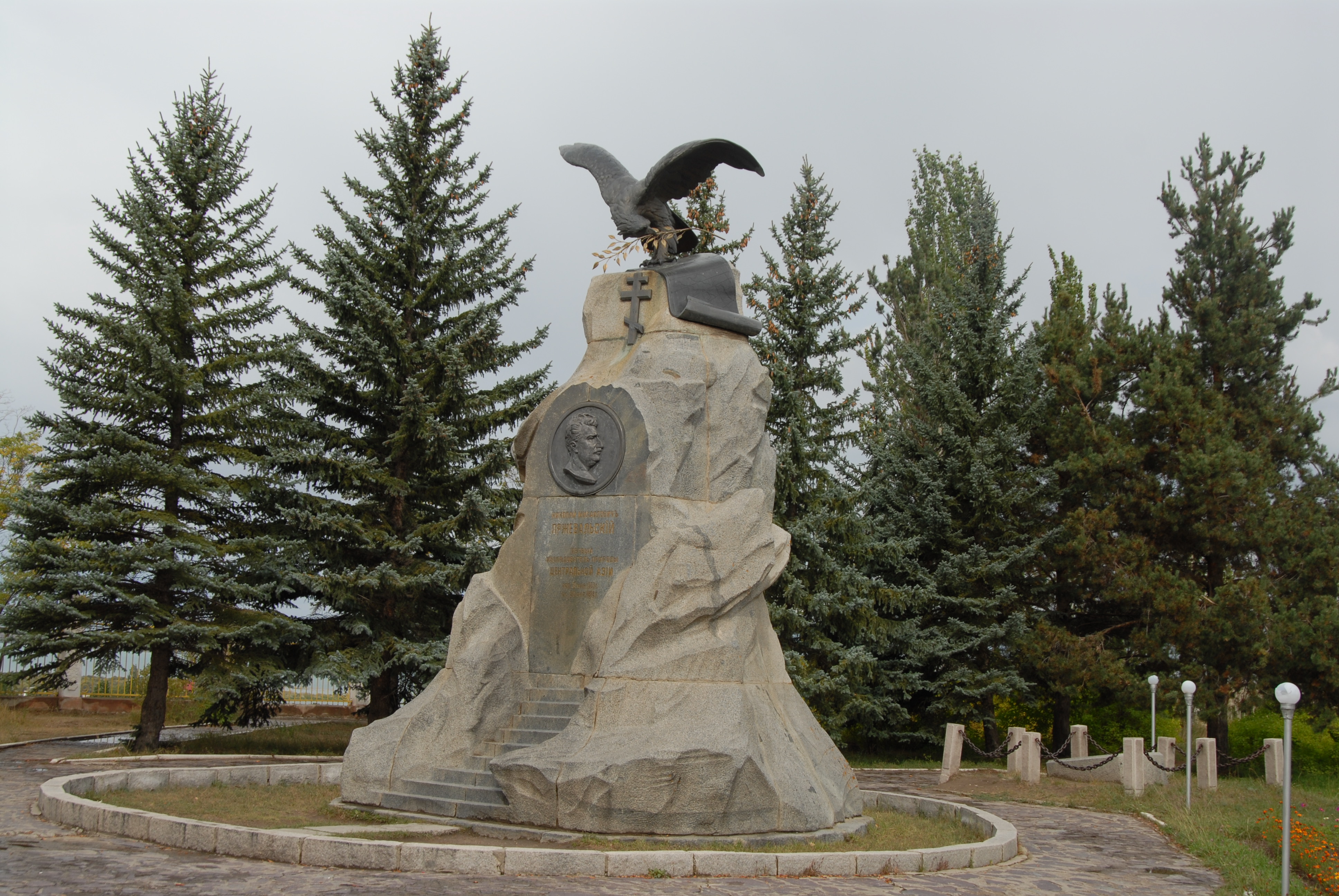
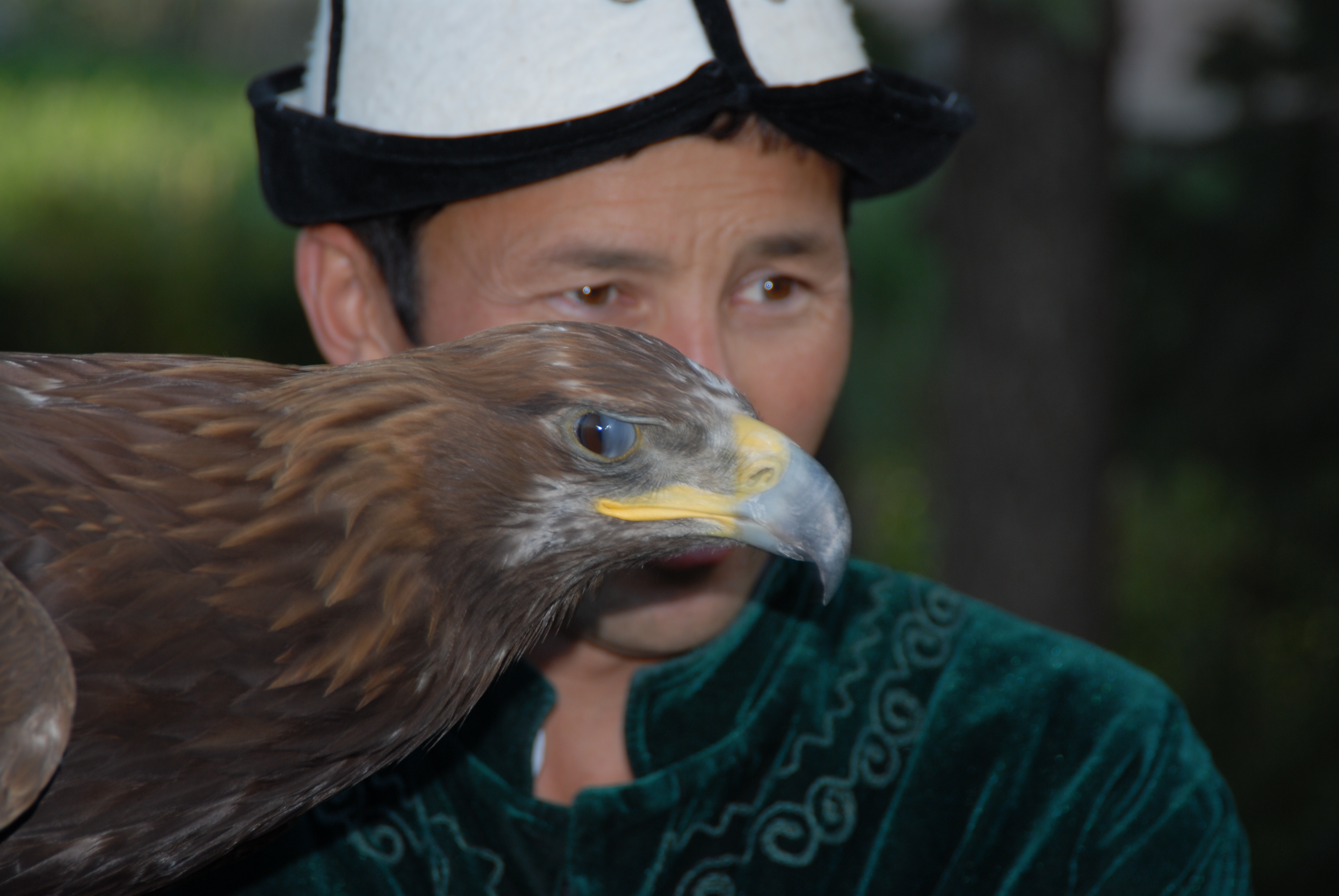
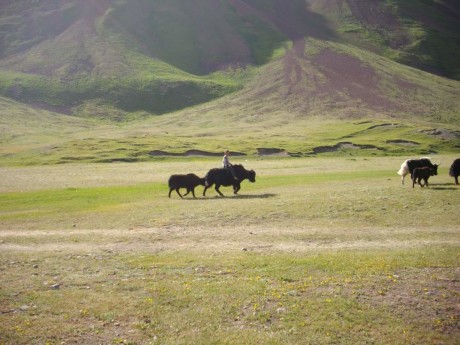
Nomad’s world
Kyrgyzstan is a small Central Asian Republic situated in the heart of high mountains, the Tien Shan and the Kazakh stepps, offers exceptional playground for lovers of trekking and wilderness.
This trip will evolve in beautiful areas. Valley Chon Kemin, Issyk Kul valley Jiluu Suu, the massive Teskey, Lake Son Kul Issyk Kul are the attractions of this Kyrgyz adventure. Son Kul lake, Issyk Kul and others will be the guiding thread of this trip.
The meeting of Kyrgyz nomads, the "People of the yurts," is also an integral part of this journey.
Program
J1 : Flight from home country to Bishkek
J2 : Bishkek
Arrival at Manas airport in the early morning . Guest house or hotel transfer . Rest in the morning and then walk into town. Visit Osh Bazaar, parks Bishkek . Night in our guest house.
J3 : Bishkek - Chon Kemin Valley
3:30 transfer to reach the starting point of our trek which lies in the valley of Chon Kemin (1750 m).
Here , our team ahead , horses for carrying our bags , our Kyrgyz guides. We engage in the little valley of Toragir . Walk along the creek in the heart of the forest. Then the valley opens up and allows us to have a view of the mountains and all the valleys. The view is amazing. Tent camps . ( 5 hours walking deniv 900 m and 200 m + -)
J4 : Lake Kol Tor
A series of small valleys allows us to reach a ridge overlooking the valley of Chon Kemin north and its peaks over 4000 m which border with Kazakhstan .In low against a great lake, Lake Kol Tor . Descent to the lake where we établierons our camp for the night. (walking 4-5 h)
J5 : Pass of Tor
We leave Lake Kol Tor behind us for the climb to the pass Toeure 3230 m. 4 hours of walking will allow us to reach . Vegetation on the summits is more rare is the area of chamois , ibex and wolves and Edelweiss ) .
Downstream of the throat , Lake Issyk Kul ( inland sea , with the 180 km long, 60 wide). Down the valley Toeure . The first yurt camps aparaissent , herds of horses, sheep are the decor.
6am walk deniv 700 + and 500 m - ) . Tent camps .
D6 : Lake Issyk Kul
We engage in a small valley that will help us reach the lake Issyk Kul. On our way , we arrréterons in ger camps , contact with nomads .... We are approaching the lake ( north shore ) , where a vehicle awaits us to move us on the south shore of the lake ( 1h30 ) and our camp on the lake. The setting is gorgeous . Tent camp .
D7: Issyk Kul : - Bakonbaeva
A short transfer brings us from our next trek. Day walking in pastures and peaks. Lake Issyk Kul is always in sight but this time to the north. We are moving towards the Ton pass , and snowy slopes Terskey . Camp along the river. (Walking 6-7 pm deniv 700 m +).
D8 : Password Ton - Suu Jiluu
This day's walk will allow us to pass the password Ton ( 4025 m) and back down to the valley Jiluu Suu . This pass is taken by nomads who bring their herds in the spring in the valley of Suu Jiluu or grass is very good . Descent to the camp ahead of hot springs where he will relax after the 8 hour walk deniv + 1200 m and 1000 m - ) . Tent camp 3020 m alt .
D9 : Lake Techik
We take a path upstream of our camp away after 2 hours of walking lakes Techik Kul. 2 beautiful lakes at 3500 m surrounded by barren mountains , territories wolves. Tour the top before descending to camp lake. (on 5 -6h deniv + 500 m, 500 m - )
D10 : Jiluu Suu - Song Kul
Day transfer to Lake Song Kul. We drive to the heart of the valley of Jiluu Suu and summits Terskey (180 km of track). We meet yurt camps , herds of yaks. Climb to the Kalmakashu password . Song Kul Lake 3025 m (the heart of Kyrgyzstan ) is in sight. Down south shore of the lake. Tent camp upstream of the lake.
D11- 12 : Song Kul
We spend two days at Lake Song Kul , one of the most beautiful places of Kyrgyzstan . Walks around the lake, camp yurts ger camps . Meeting with nomads who spend summer in this beautiful wilderness . Night in tents .
D13 : Song Kul - Kekemeren
We take the road to the valley of the Kekemeren . We engage in a canyon through which flows a mighty river with turquoise waters. Night in tents along the river. .
D14 : Kekemeren - Bishkek
Transfer to Bishkek . Afternoon free . Overnight in Guest house or hotel.
D15 : Flight Bishkek - Home country
The prices include:
The organization of living
Transportation throughout the stay
Full board meals (except meals in Bishkek ) .
Accommodation throughout the stay
The camping equipment
English or french speaking guide.
Permit ecological zone
Prices do not include:
Flight tickets
Drinks and extra staff,
Visa fees
Meals in Bishkek
Tips
Travel insurance - repatriation
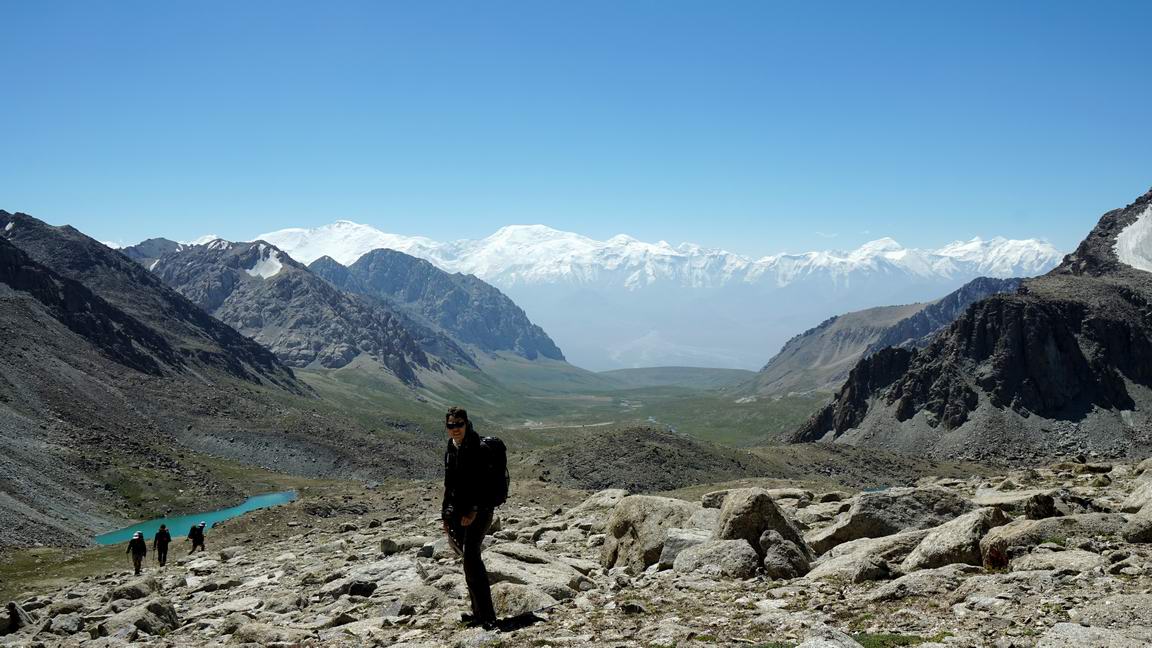
From Kichi Alay to Pamir Alay
From Kichi Alay to Pamir Alay
"Mountrek Ecotours" would like to introduce you to the fascinating country located in the heart of the Tien Shan. Kyrgyzstan, a country of nomads, offers mostly unexplored mountains with a magnificent playground for all nature-lovers and virgin. Kyrgyz, who have maintained their tradition of hospitality peacefully live in an amazing variety of landscapes which makes this country the pearl of Central Asia (steppes, prairies, deserts and canyons, high alpine valleys and lakes with turquoise water). During the summer and in the winter, Mountrek team invites you to the program are not published.
Program:
Day 1: Flight Bishkek - Osh. Meeting at the airport and transfer to our guesthouse. Accommodation at the hotel, rest and after breakfast journey to the heart of the Osh market, which is one of the largest and most colorful of Central Asia; all the locals pass by this place where craftsmen and suppliers of all types are grouped by sector. Late afternoon excursion on Mount Suleiman, a place of pilgrimage of Zoroastrianism. Dinner in town and overnight in a guest house.
Day 2: Osh - Kojo Kelen: Moving in the valley Kojo Kelen
Morning transfer to the Kojo Kelen valley, going up the river Ak-Bura, passing through Osh. We leave the plains and civilization, and soon we drive into the gorge. Lunch with the locals. In the afternoon, followed by a walk.
Night in the guest house.
Day 3: Kojo Kelen - Valley Zhiptik: hike to the foot of the pass Zhiptik (alt.3250 m)
Morning access to our big hike along the river in a beautiful environment of the thousands of colors Kojo Kelen valley. Picnic on the shore of the same river. Source of the river is the direction of our pass 4470 m. In the afternoon tour of the valley and visit the Kyrgyz nomads. We stop for a moment to enjoy the nomadic way of life and continue to the foot of our pass. Install our camp. Dinner and overnight in tents.
Day 4 (. 4470m) North Valley Zhiptik - Pass Zhiptik - South Zhiptik. The path rises steeply among lush vegetation in the direction of our Pass, where we have a beautiful view of the mountain ranges of the Pamirs. Descent with a view toward Alaya to the picnic site. In the afternoon, we go down to the southern valley Zhiptik. Overnight in tents.
Day 5: South Zhiptik - pastures Sary-Mogol: Hiking to the Sary-Mogol pasture.
All day, we follow the path of the Sary-Mogol west to the foot of the pass, near rocks and glacial moraines. Herds of sheep and horses are on this circus all summer. Overnight in the yurt. (3350 m)
Day 6: Pasture Sarah Mogol- Lake Sary-Mogol: Hike to the foot of the pass Sary Mogol (4150m). In the morning we head to the lake at the foot of the pass Sary-Mogol, climbing a steep slope with talus in the direction of the Alai Range. This is the most difficult stage of the campaign. In the afternoon, we go up a large glacial cirque lakes. We go down to the lake, located on the shore of the lake bottom. Overnight in tents.
Day 7: Lake Sary-Mogol - pastures Sary Mogol-South: Hiking in the Sary-Mogol South Valley (3350 m)
Today, down the valley of the Sary-Mogol jailoo wild and impressive landscape. Discover the nomadic way of life. Set in yurts. Overnight in the yurt.
Day 8: jailoo Sary-Mogol-South - Kara-Kabak - Hike through the high plateau Korumdu
In the morning, climb up to the plateau Korumdu, then go through the pasture to the valley of Kara-Kabak. Panorama is very extensive and offers incredible views of the Lenin Peak. Overnight in tents.
Day 9: Kara-Kabak - Damzhayloo: Hiking to the lakes Kosh Kel.
In the morning we pass a small hill to climb to the next valley, follow a small path between the bushes and small meadows. Valley goes west and expands grazing place against the backdrop of high peaks. The pass is on vys.4150 m. Hiding the beautiful scenery, then we can easily get down to the lake Kosh Kel and set up camp. Overnight in tents.
Day 10: Damzhayloo Day attacks on glacial lakes Damzhayloo
The trip the next day to the circus Damzhayloo that hides several lakes above our camp, picnic near the big lakes. Return to the same camp. Overnight in tents.
Day 11: Damzhayloo - Ming Jar: Descent to Kashka-Suu
A long descent through pastures, with views of the Trans-Alay mountain chain which ends with a view of Lenin Peak and the village of Kashka-Suu. Then transfer to the foot of Lenin Base Camp and installing the upper part of the river camp Achyk Tash. Overnight in tents.
Day 12: Trekking to the Base Camp 1: After breakfast we cross the Travellers pass on alt. 4100m. Then we go through a steep trail to the top of the river Achyk Tash. We are expected by local horse transporters who earn money by transporting across a large river ford. We climb for another hour more to get to their destination BC1. A little rest, and then walk to the Lenin glacier. Dinner and overnight in BC 1.
13 day. Day of the transition to the western hill: Track up to the middle of the day 550 meters to the west hill; Beautiful panoramic view from the top to our camp, and the snow-capped peaks surrounding the valley. We descend to Base Camp 1, to say goodbye and go down to the lower base camp, where we were waiting for our driver. Then move on our truck in the village of Sary-Tash.Razmeschenie at a local guest house.
Day 14. The village of Sary Tash - Osh:
Transfer to Osh. Lunch in Osh. Accommodation in the guest house and rest. In the afternoon walk in the park Alymbek Datka. Last dinner at a local restaurant. Overnight in the guest house.
15 day. The city of Osh - Osh International Airport:
Transfer to Osh airport. Flight home.
Date:
From mid-May to mid-September
Price includes:
- Organization of stay
- All transfers incl. airport
- English speaking guide
- Full board incl. drinking water
- Accommodation described in the program
- Transportation of luggage during trekking and horse riding
- Rental camping equipment (tents, mats, kitchen utensils)
- All visits indicated in the program
- Entrance fees to national parks or nature reserves
- Entrance fees to museums mentioned in the program.
Price does not include:
- Insurance and repatriation insurance CR
- International airfare and taxes;
- Alcohol
- Additional services are not mentioned in the program;
- Personnel expenses and personal equipment rental (ATV, sleeping bag, water bottle, flashlight, etc.)
- Additional costs associated with personal problems (health, loss of luggage, etc.).